Cleaning an empty nest box in autumn
Autumn maintenance starts with confirming that nesting has finished, and with checking the rules if eggs remain.
A date does not prove a box is empty
Autumn is the usual time to clean an ordinary garden nest box, but some birds can still be breeding after summer has apparently ended. Watch for activity first. A few quiet minutes are not enough to decide that a box is abandoned, and a gap between broods is not the same as the end of the season.
If there is any indication of an active nest, leave the box alone. Do not move birds, eggs or nesting material to complete a cleaning job. The work can wait. Specialised sites, including swift accommodation, need their own maintenance guidance rather than this general routine.
Check the position before taking it down
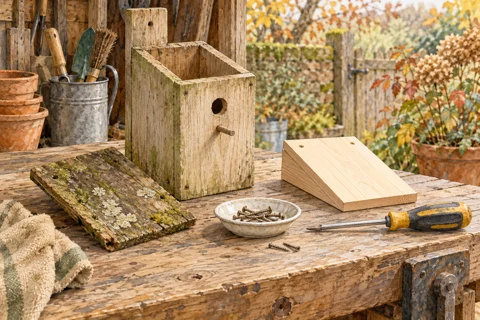
Plan safe access and decide where the cleaning will happen. A stable outdoor work area at ground level is preferable to handling hot water and loose material while balanced on a ladder. Keep children and pets away from the work area and use gloves reserved for this kind of task.
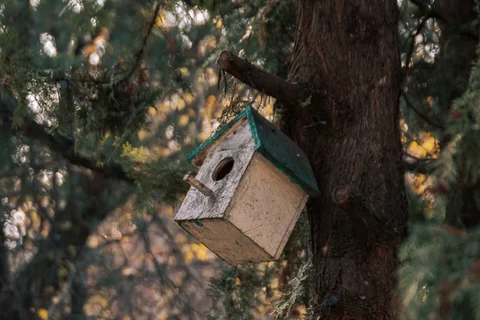
Before opening an inactive box, photograph its mounting if reassembly is not obvious. Set screws and removable panels somewhere they cannot roll away. If the wood has become so soft that the floor could fall out, assess replacement rather than assuming cleaning will restore its strength.
If unhatched eggs remain
Egg removal is governed by conditions that differ between UK nations. In England, Natural England's GL12 permits authorised people to remove abandoned or unsuccessful eggs from inactive nest boxes between 1 September and 31 January, subject to the licence's full terms. Removed eggs must be destroyed promptly and cannot be kept as souvenirs.
That is not a blanket permission to empty any nest during those months. Read the current licence before relying on it. For Scotland, Wales or Northern Ireland, check the relevant authority's current guidance rather than assuming England's licence applies. If you are uncertain about activity or the contents, postpone the job and seek advice.
Clean without leaving a treatment behind
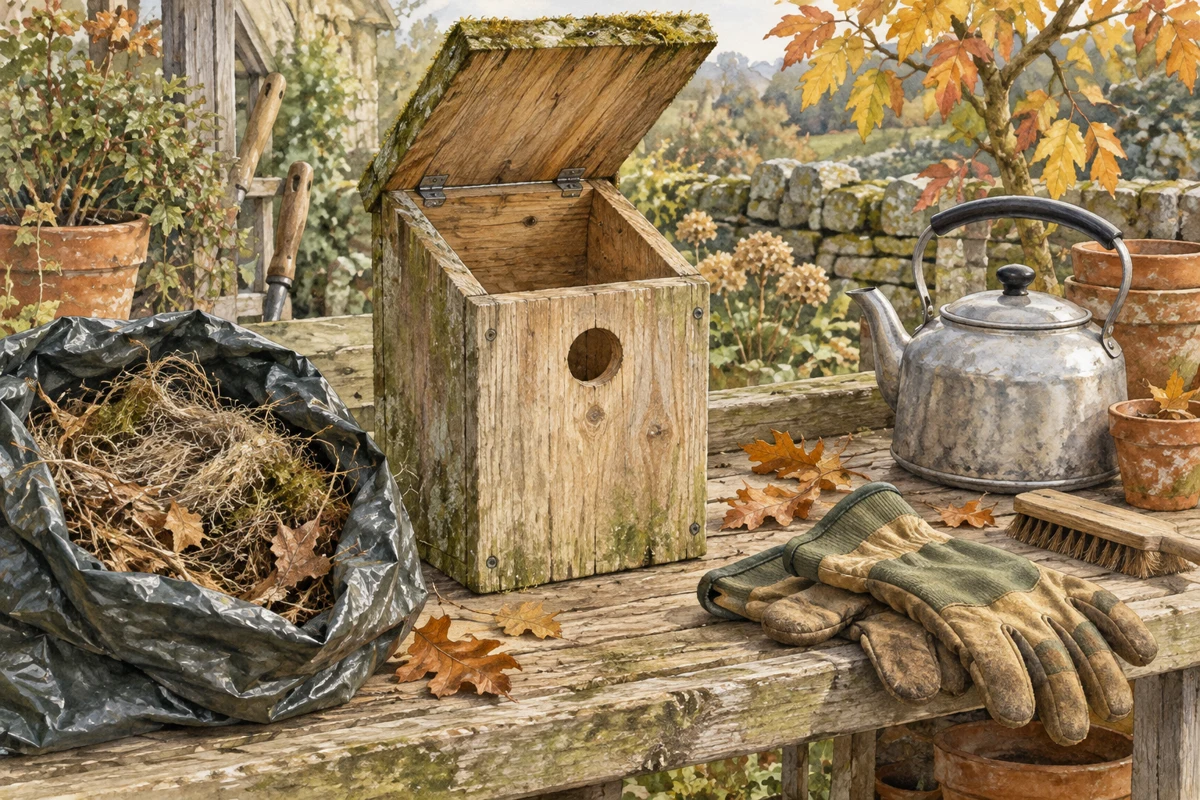
For a suitable empty wooden box, RSPB recommends boiling water after old material has been removed, then thorough drying. Work carefully at ground level to avoid scalding. Do not use flea sprays or insecticides in the chamber. Follow manufacturer instructions where the material or construction requires particular handling.
Inspect the lid, joints and drainage while everything is accessible. Replace an unsafe fixing and make sure the access panel will close securely. Let the interior dry fully before rehanging; closing a wet chamber and hoping it will dry later defeats the purpose of taking care over the job.
Prepare for an unexpected finding
Before taking down a box, decide what you will do if it contains something you did not anticipate. A living animal, an apparently active nest or a group of dead birds changes the task. Stop and obtain advice rather than continuing because gloves and hot water are already ready. If a bat is present or suspected, leave it undisturbed and seek appropriate bat advice; a bird-box maintenance plan does not authorise handling other protected wildlife.
The relevant egg-removal licence may also contain reporting conditions, so read the full current text rather than relying only on the dates quoted in a short guide. Photographing the outside and keeping the box identification is enough for an initial conversation. There is no need to take out contents so you can describe them more precisely.
For a community box scheme, include a contact route in the maintenance notes. Volunteers should know whom to ask when routine cleaning becomes an unfamiliar wildlife situation.
Finish with a short record
Note the date and any repairs, without retaining eggs or taking unnecessary close-up photographs of remains. Wash your hands after removing gloves and store the cleaning equipment apart from household utensils.
If the opportunity is missed before birds begin using the box again, do not rush in for a late spring clean. Leave it until the next appropriate inactive period. An imperfect maintenance timetable is preferable to disrupting a nest in progress.