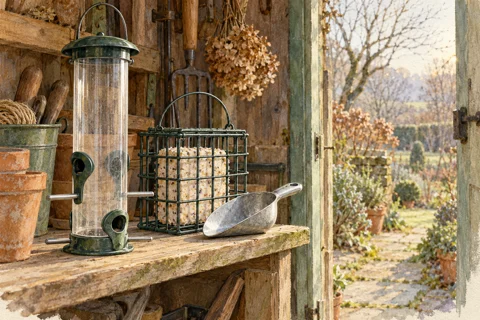
Feeding & care
The seasonal approach to feeding garden birds
The 2026 guidance changes the calendar for seed and peanuts. The aim is to reduce sustained crowding and disease transmission.
Seasonal choices and keeping shared places clean
The 2026 guidance changes the calendar for seed and peanuts. The aim is to reduce sustained crowding and disease transmission.
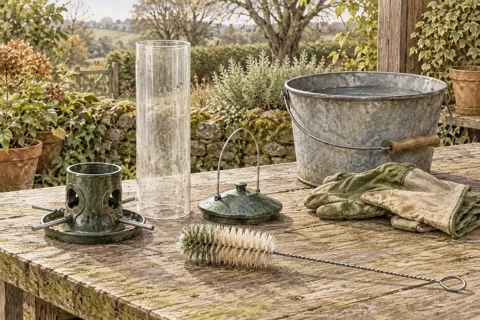
A feeder should be easy to empty, dismantle, wash and dry. Build those steps into the routine before refilling it.
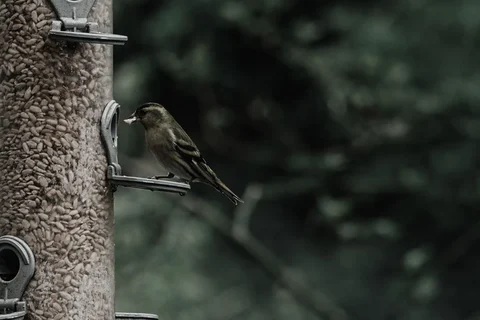
The most important demonstration is how a feeder comes apart. Capacity and appearance come after access to its dirty corners.
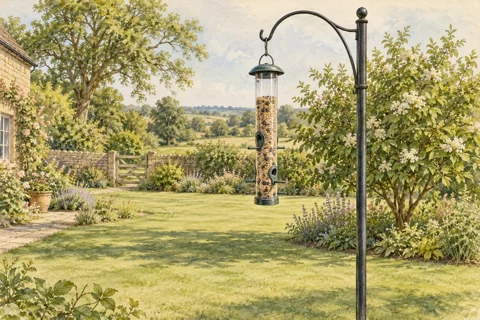
Find several manageable hanging positions, with a clear view for birds and room for you to clean beneath them.
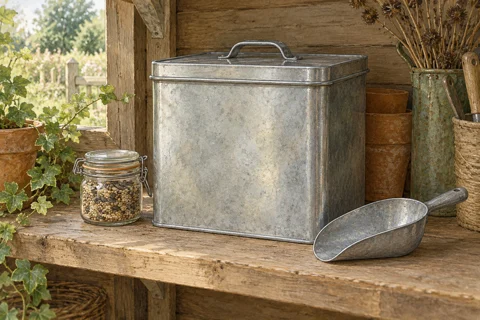
A low price per kilogram is only useful when the seed stays dry and is used during the appropriate season.
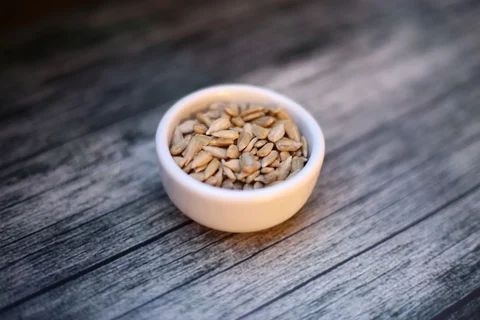
Removing the husk reduces shell waste, but hearts can still become wet, stale or scattered below the feeder.
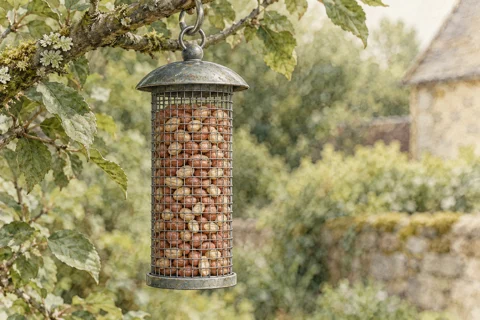
Offer plain bird-food peanuts in rigid mesh that suits the purpose, and inspect the mesh as carefully as the contents.
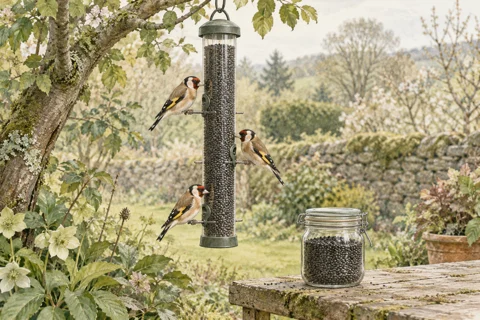
Fine seed needs an appropriate port, small quantities and the same seasonal pause as other seeds.
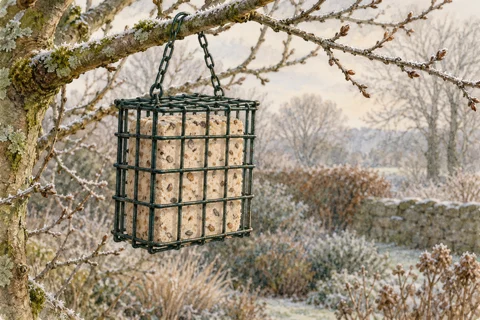
Choose a manageable portion and a suitable holder, then let temperature and leftovers guide the next serving.
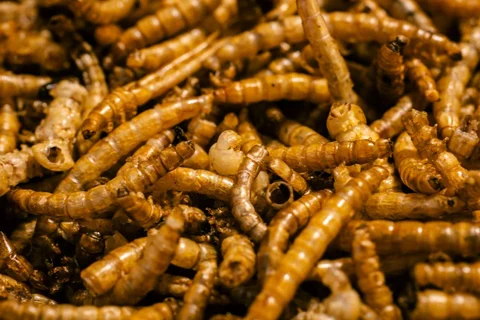
A small serving is easier to manage than a generous dish that remains outdoors into the evening.
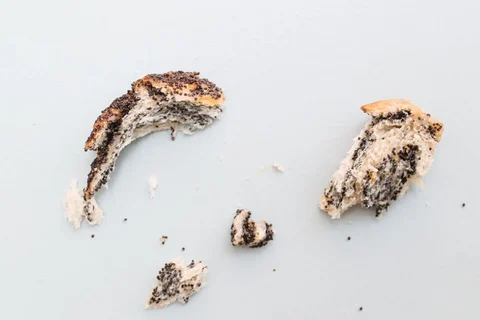
Reducing kitchen waste is worthwhile, but a mixed bowl of leftovers makes it difficult to know what wildlife is receiving.
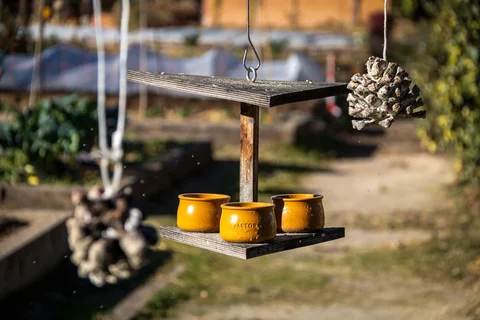
A familiar bird table deserves a fresh look in light of current guidance on disease transmission.