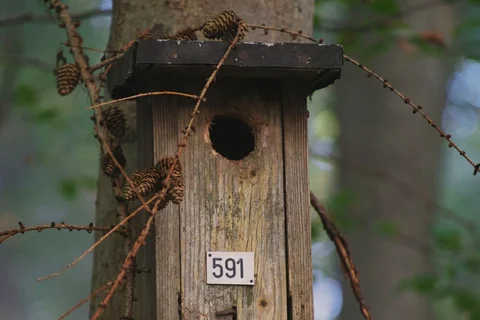
Nest boxes
Choosing your first nest box
Start with the birds and the place, then look at the box. A decorative roof is a long way down the list.
Homes, placement and the work between nesting seasons
Start with the birds and the place, then look at the box. A decorative roof is a long way down the list.
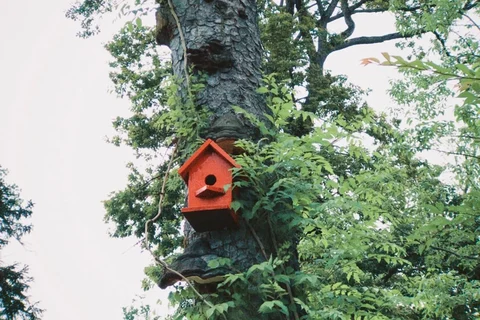
A compass direction is only part of the decision. Follow the shade, rain and everyday traffic around the proposed site.
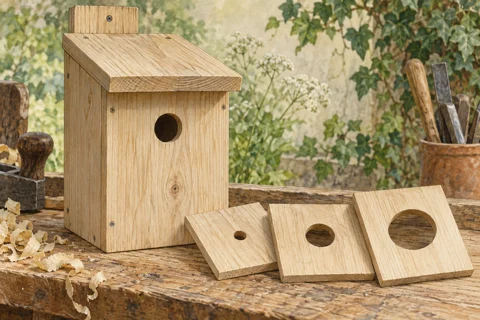
Entrance diameter influences access, but the size of the chamber and the intended species matter alongside it.
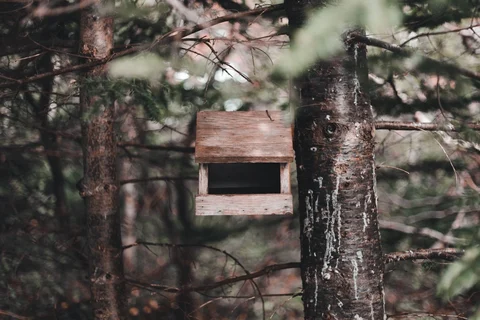
An open entrance needs a different setting from a small round hole: concealed, quiet and difficult for predators to approach.
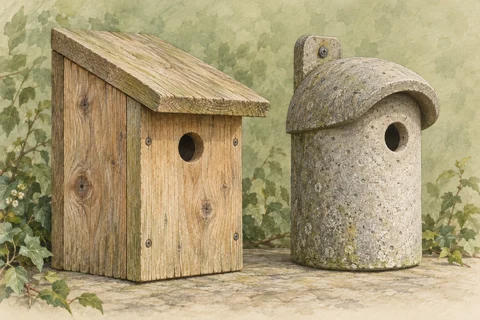
Compare insulation, weight and the way a box will age before deciding between timber and a wood-and-concrete composite.
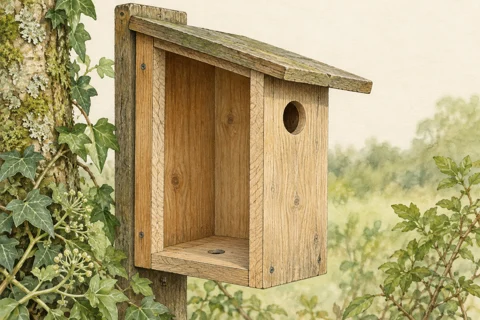
A decorative exterior can hide a cramped chamber. Check the space from the inside before a box goes outdoors.
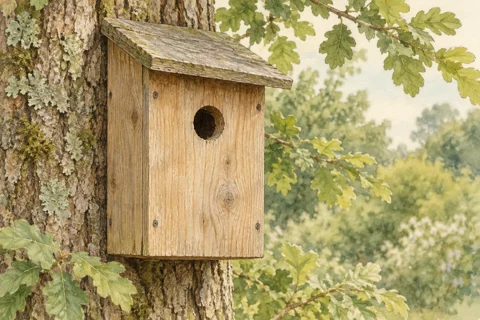
A little wooden dowel looks welcoming to people, but small hole-nesting birds can use an entrance without it.
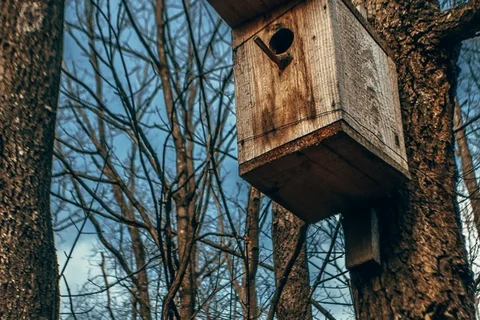
A secure fixing must remain secure as bark, branches and the trunk change over time.
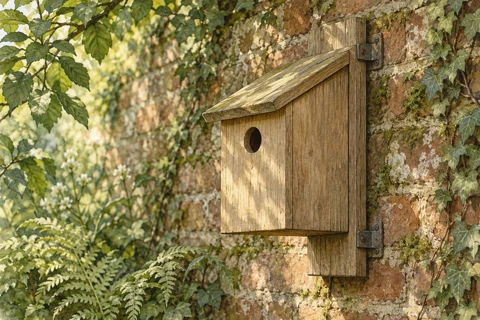
The wall, fixing system and access arrangement need to suit the box before its entrance ever attracts a bird.
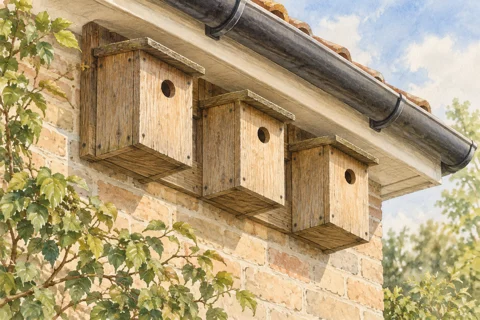
Think about several neighbouring nest spaces and the habitat around them, rather than treating a terrace box as a guarantee.
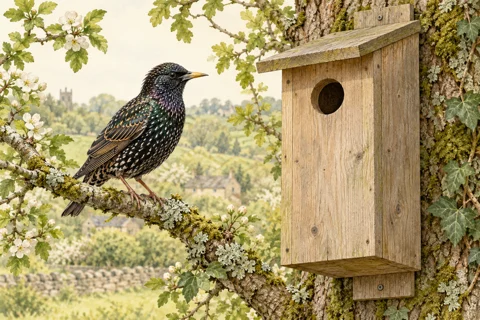
A starling needs a purpose-sized chamber, not a tit box with its doorway drilled wider.
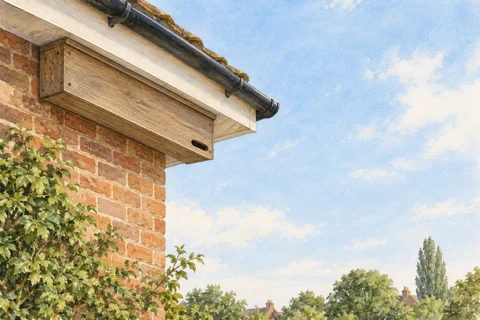
A swift nest site is a building project with a long future. Start with the elevation, access and local advice.