Attaching a box without forgetting the tree
A secure fixing must remain secure as bark, branches and the trunk change over time.
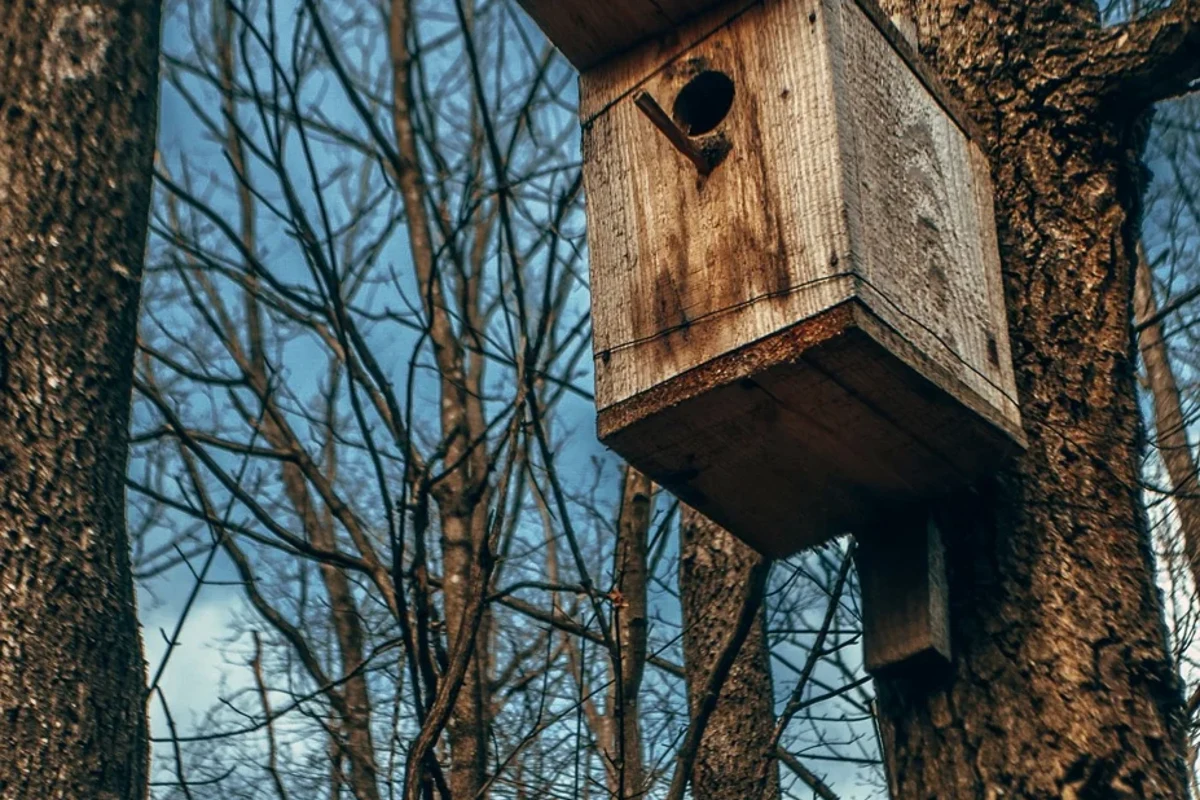
A tree keeps growing
A wall fixing can be inspected as a largely static arrangement. A tree mounting needs a longer view. The trunk grows, bark changes and branches move in wind. A fastening that looks comfortable on installation day may tighten or become awkward several years later.
Choose a mounting system intended for the weight of the box and the tree in question. Avoid casually wrapping thin wire tightly around the trunk and forgetting it. If you are unsure which system is appropriate, ask the tree owner or an arborist, particularly for a valuable or protected tree. Permission to put up a box does not necessarily include permission to drill into the trunk.
Check the support before the fastener
Look at the condition and stability of the proposed support from the ground. A cracked branch, loose bark or a badly leaning small tree is not made suitable by a stronger strap. Also consider what lies beneath the work area. A border full of pots or uneven roots can make access difficult even at a modest height.
Plan how the box will sit without rocking against a projecting knot. Its entrance should remain appropriately orientated and clear. Do not force the back flat by over-tightening a fixing against an irregular trunk if the manufacturer's arrangement does not allow that.
Keep an inspection record
Take a photograph after installation that shows the fastening, the whole box and a recognisable part of the tree. Record the date, box model and mounting method. A note is especially useful in a shared garden, where the person who notices a problem may not be the person who installed it.
Schedule checks while the box is inactive, following the mounting system's instructions. Look for a strap pressing into bark, damaged hardware, a changing angle or new movement. Ground-level observations after wind are useful, but they do not replace a proper inspection where one is safely possible.
Shared trees need shared information
In a community garden, put a discreet box number in the maintenance record and relate it to a clear tree photograph. Avoid relying on descriptions such as the big tree by the gate if there are several entrances or if a future volunteer has never visited the site. Record who gave permission and who should be contacted before changing the mounting.
If a contractor will prune or inspect the tree, provide the information before the appointment. A box hidden on the far side of the trunk can be missed during a brief first look. The contractor needs to know about potential bird use as well as the presence of hardware on the tree.
Agree an inspection responsibility instead of assuming that someone will notice a tightening strap. A named role with a review date is enough; it need not become a complicated database. What matters is that the box remains part of the tree care plan after the enthusiasm of installation day has passed.
Growth can change the setting too
A branch that was well above the entrance can extend across it. A young climber can become a dense curtain. Review those changes before nesting starts, rather than planning to clear the approach after birds have settled.
If the tree needs work and the box is occupied, tell the contractor before anything begins. Do not remove the box or disturb the nest to keep a maintenance appointment. Where safety creates an urgent conflict, obtain appropriate professional and wildlife advice. The box, the tree and the people working nearby all need to be considered together.