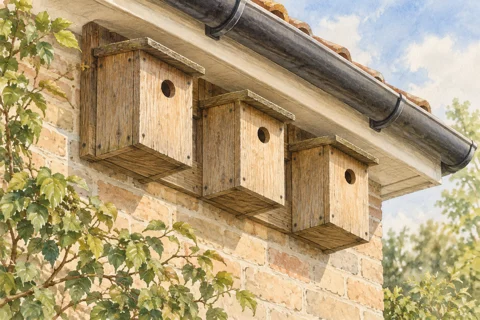
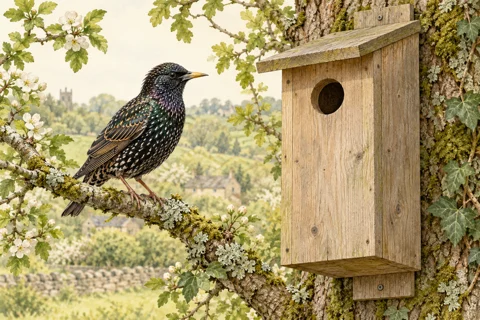
Planning a wall-mounted nest box
The wall, fixing system and access arrangement need to suit the box before its entrance ever attracts a bird.
Decide which surface carries the weight
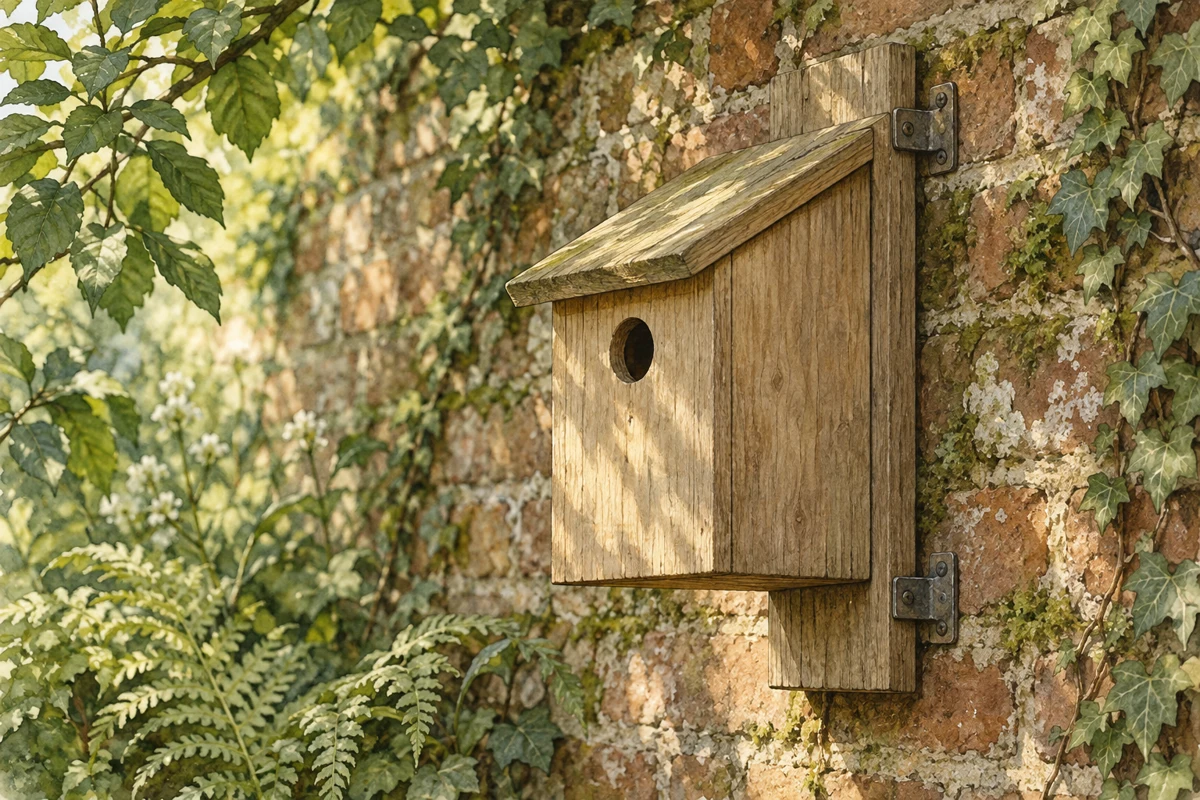
A wall may be solid brick, block behind render, timber cladding or an insulated exterior system. These are not interchangeable fixing surfaces. A screw that holds in one may be unsuitable for another, and drilling can damage a weatherproof layer or a concealed service.
Use the box manufacturer's mounting instructions alongside advice appropriate to the actual building. If the construction is uncertain, arrange competent help. The aim is a secure installation without compromising the wall, not simply a bracket that appears firm when pulled once.
Plan the position on paper
Photograph the elevation and mark possible sites. Consider sun exposure, the approach to the entrance, nearby windows and routine activity. A spot over a busy back door may be convenient for installing the box but inconvenient for birds using it. Keep the nest area separate from hanging feeders.
Check whether a gutter, overflow or roof edge directs water towards the position. There is a difference between a wall that is dry in light rain and one that receives a concentrated stream during a downpour. Look for old water staining before committing to the location.
Permission matters in rented and shared buildings. Agree the proposed work, access and later maintenance with whoever controls the exterior. An email with the box model and marked photograph is easier to understand than a vague request for a birdhouse somewhere upstairs.
Installation and future access
Think beyond the first fitting. A design with a removable front may need working room around it; a lifting roof may foul an overhang. Check that its maintenance opening can operate in the intended position before drilling.
Heavy boxes and high sites deserve a planned access method. Do not carry a bulky box up an unsuitable ladder while trying to hold loose fittings in the other hand. A suitable installer may be the sensible choice, particularly near roof level or above a conservatory.
Put the box in the property record
Keep the product instructions, fixing details and a photograph of the completed installation together. In a rented house, agree who will inspect it and what happens if the tenancy ends. A box should not become an undocumented item that the next contractor removes without considering its use.
When arranging exterior painting or insulation, show the contractor the photograph at the quotation stage. Early notice gives time to consider timing and specialist advice if needed. Waiting until scaffolding is erected turns a foreseeable wildlife constraint into a rushed discussion, especially where birds are already using an entrance.
Leave the building work outside the breeding period
Once birds use the box, painting, drilling and removing adjacent fittings can become disruptive. Put the box on the household maintenance plan so its presence is remembered when other work is booked.
If a future repair requires the occupied site to change, seek advice rather than shifting it to the next wall. Birds do not read a replacement address. Keeping a known nest entrance undisturbed is a different task from installing a new, empty box.