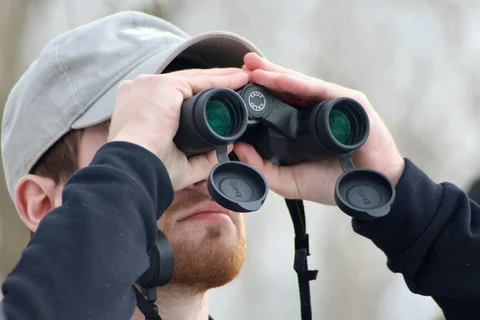
Watching birds
Choosing binoculars for a garden view
Begin with the distance to your nearest useful perch and the view you can hold comfortably.
Slower observation, notes and equipment
Begin with the distance to your nearest useful perch and the view you can hold comfortably.
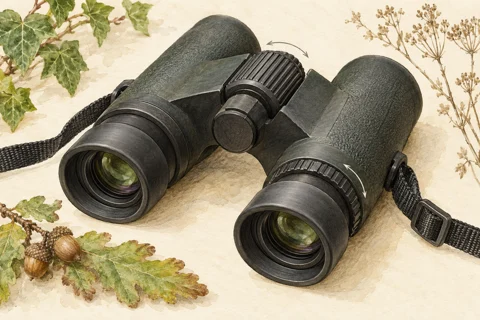
Set the binoculars for your eyes once, then use the main focus to follow changing distances.
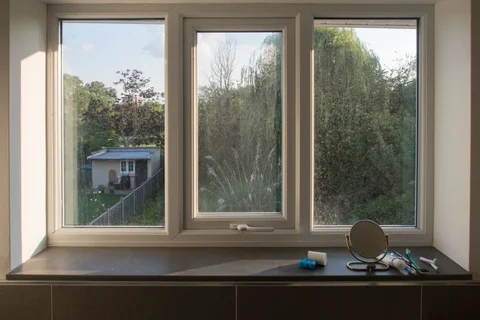
A comfortable indoor position can reveal normal behaviour, provided the window does not become a source of disturbance.
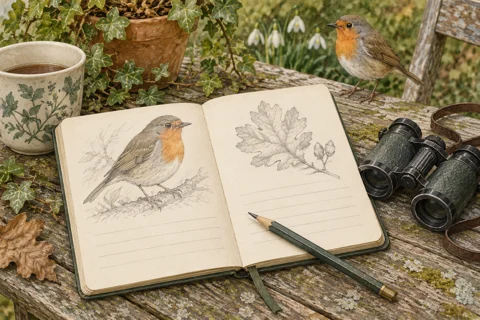
A few precise details written immediately can be more useful than a long species list reconstructed at night.
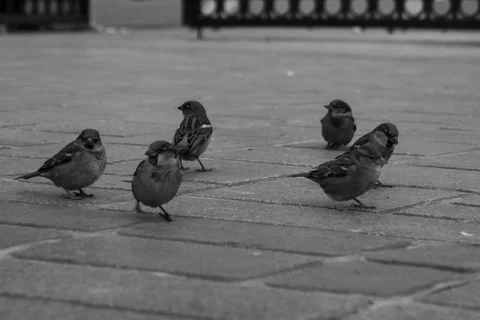
Decide what your number represents before you begin adding birds to it.
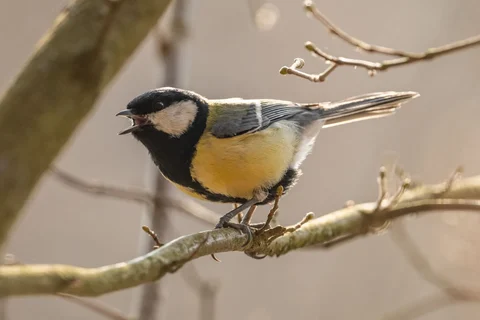
Start with a visible singer and one repeatable feature of its sound.

A familiar safe place and a modest listening period are enough to notice the morning change.
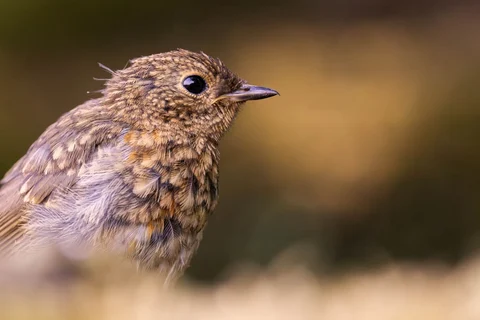
An unfamiliar youngster often belongs to a familiar species whose adult markings have not appeared yet.
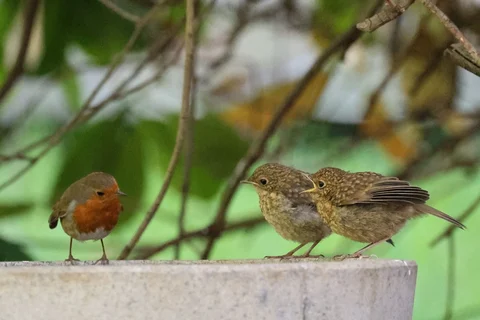
First assess immediate danger from a distance, then distinguish a normal young bird from one needing qualified help.
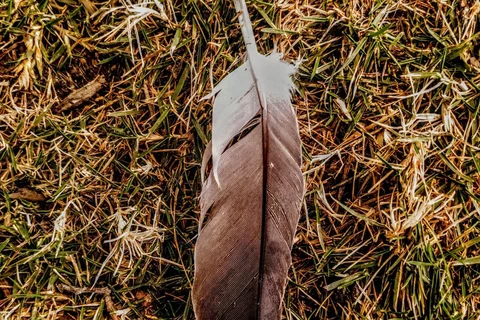
Feather replacement can change a familiar bird’s appearance, but it should not become an automatic explanation for every problem.

An empty view is a starting point for observation, not proof that all the birds have gone.
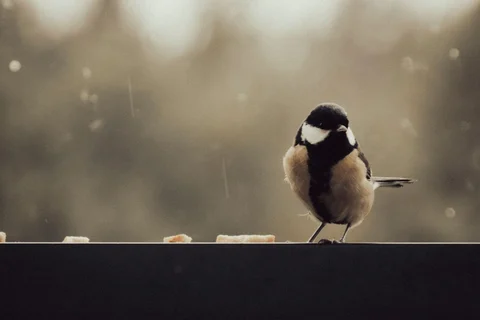
A sheltered view lets you notice where birds wait, search and resume their activity after a shower.