Why young birds can look unfamiliar
An unfamiliar youngster often belongs to a familiar species whose adult markings have not appeared yet.
Put the adult picture aside
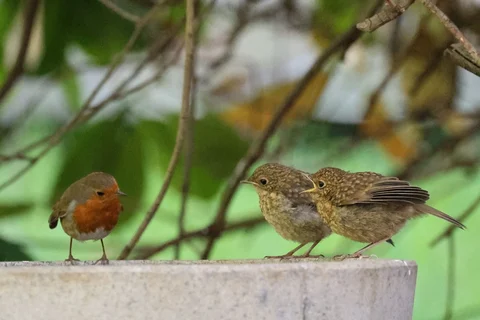
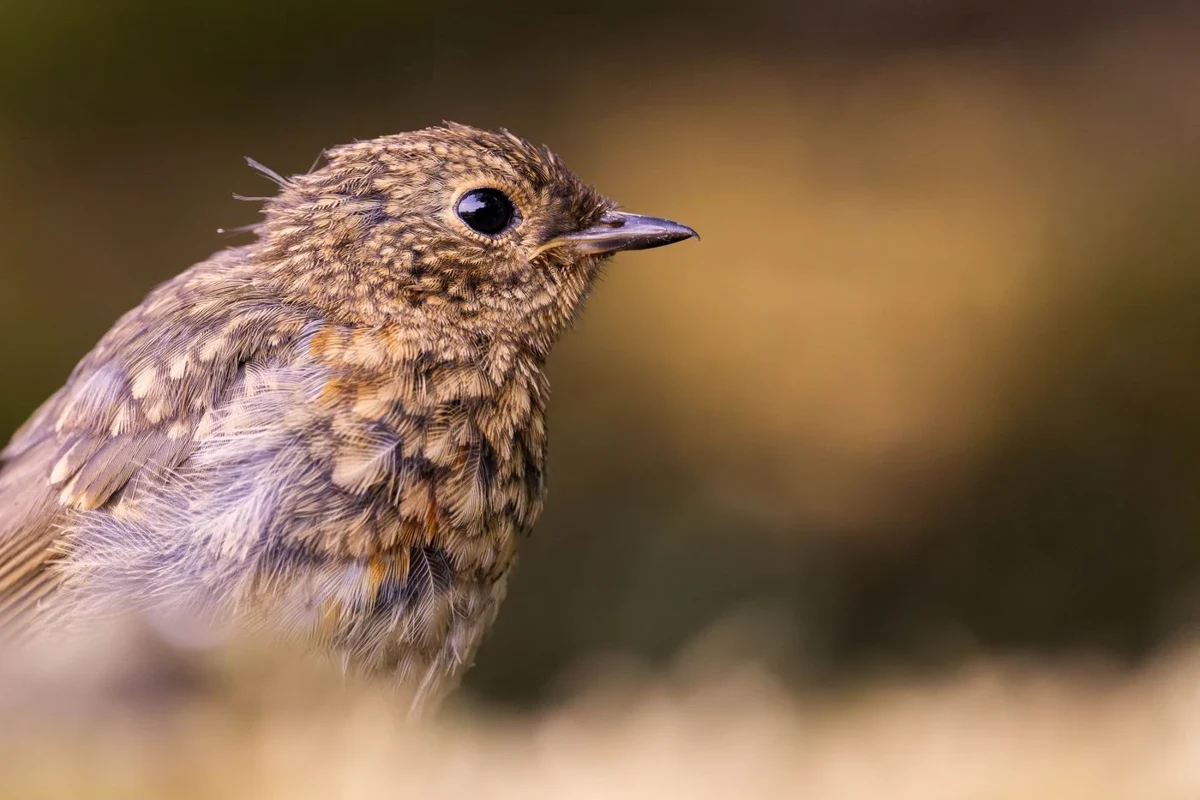
An identification guide opened at an adult male can make a young garden bird seem impossible. A juvenile robin lacks the familiar red breast, a young goldfinch lacks the adult face pattern, and a young starling can look plain brown. The first step is to consult illustrations or photographs that show age-related plumages, rather than searching only for a new species with the same colour.
Start with the outline: bill depth, tail length, body shape and the way the bird moves. These can remain useful when the colour pattern differs. Then look for accompanying adults, without assuming that the nearest adult is necessarily a parent.
Watch the interaction
A clear feeding exchange gives you more information than two birds standing near each other. Record which bird offered food and which received it. If the exchange happens partly behind leaves, describe only what was visible. It is easy to turn a brief movement into a story more detailed than the evidence.
Young birds may beg, follow adults or wait in cover. Keep pets away and avoid approaching simply because the bird seems less wary. A youngster's limited flight is not an invitation to pick it up or place it for a photograph.
Do not force age and sex into every record
You may be able to identify the species without confidently identifying age or sex. That is enough. A pale gape, loose-looking feathers or a short tail can support an age assessment, but no single casual clue works universally. Some adult plumages and moulting stages also look untidy.
For a photograph, retain the original and note the date. A heavily sharpened crop can invent edges or erase subtle markings. When asking for identification help, include location, approximate size and behaviour as well as the image.
A different question from rescue
Unfamiliar appearance and need for help are separate issues. A healthy, fully feathered fledgling on the ground is often still receiving parental care. An injured bird or an unfeathered nestling needs appropriate advice. Consult a wildlife rescue service or vet if the situation is unclear rather than trying to raise it yourself.
The most useful response to a normal family group is often to give it space. You can learn the young birds' markings over repeated distant sightings without knowing exactly where the nest was. Leave that location undiscovered and let the adults continue their work.