A young bird on the ground is not always abandoned
First assess immediate danger from a distance, then distinguish a normal young bird from one needing qualified help.
Pause before picking it up
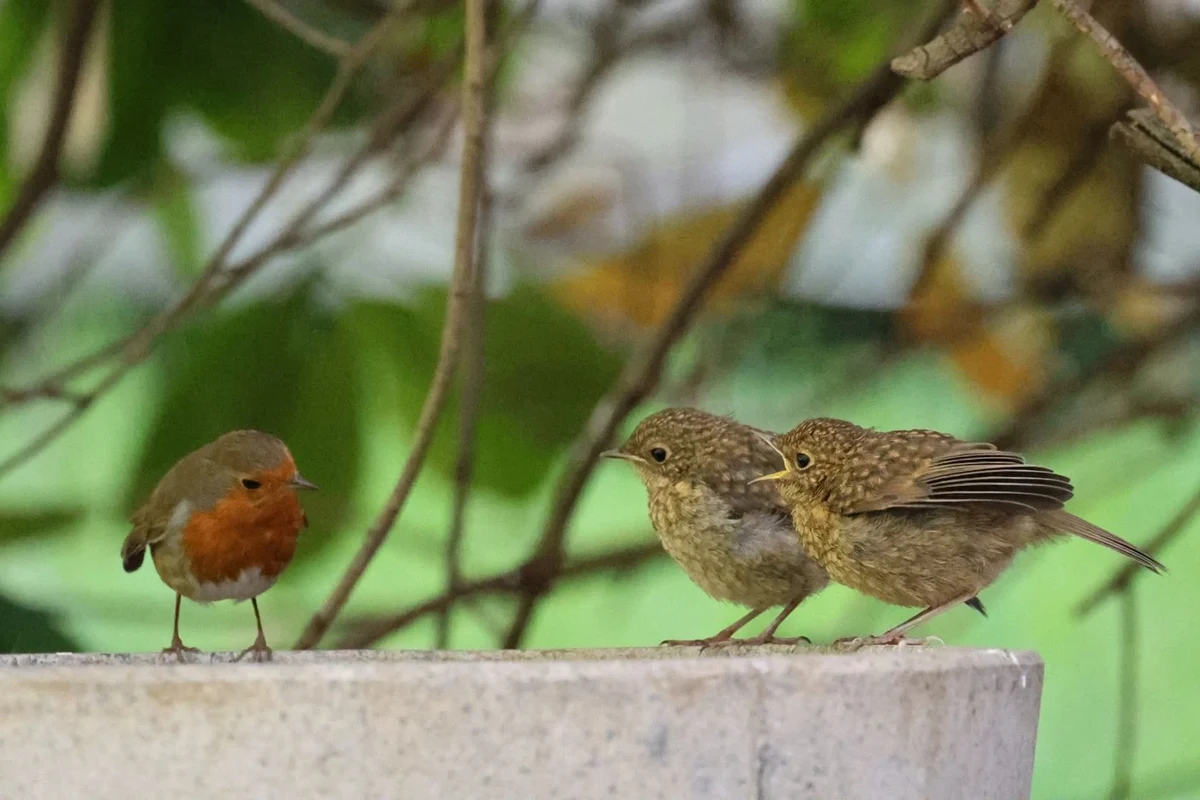
A young bird sitting on the ground can look abandoned, especially when no adult is visible. For many garden birds, leaving the nest comes before strong, confident flight. A fully feathered youngster may spend time in cover while its parents continue feeding it. The adults may be waiting for you to move away before they return.
Keep children and pets back, then observe from a place that does not block the parents' approach. Do not gather neighbours around the bird to decide what to do. A growing audience makes it harder to see the normal behaviour you are trying to assess.
Feathered or largely bare?
A fledgling has feathers and can usually perch or move about, even if its flight is limited. A largely bare or downy nestling is at a different stage and should not ordinarily be outside the nest. If you are unsure which you have found, contact a wildlife rescue service or vet for advice, describing the bird's appearance and the situation accurately.
Species matters too. General garden-songbird advice should not be applied automatically to every grounded bird. A swift on the ground, for example, requires specialist assessment rather than being treated as a normal hopping garden fledgling. Never throw a bird into the air to see whether it can fly.
Avoid deciding age from size alone. Some small adult birds are smaller than the fledglings of larger species. A photograph taken from a respectful distance can help a professional advise you without repeated handling.
Separate a quiet gap from an emergency
An adult not appearing during a few minutes of watching does not prove abandonment. Nor does a young bird sitting quietly by itself prove illness. Look for the situation as a whole, while remaining far enough away for normal activity to resume.
Visible injury, bleeding, inability to stand, obvious weakness or a known cat attack warrants prompt professional advice. A cat-caught bird may need help even if no wound is obvious. Do not wait for a visible injury to develop before contacting a rescue or vet.
Current disease precautions also matter. Do not handle sick or dead birds; consult current official advice and the appropriate reporting route. Keep pets away from them. Online advice written for a healthy fledgling is not a substitute for guidance about a potentially diseased bird.
If there is immediate danger
A healthy fledgling on a busy path or beside a road may need a very short move to nearby shelter, rather than removal from the area. Seek advice if you are uncertain, and keep it within the immediate vicinity so its parents can find it. Do not carry it home simply because the garden looks exposed to you.
For a nestling, a professional may advise returning it to the correct reachable nest where that can be done safely. Do not climb to an inaccessible nest or place it into a random nest that seems suitable. The identity of the nest and your own safety both matter.
If a rescue service asks you to contain a bird, follow its instructions about handling, a suitable ventilated container and transport. Keep the environment quiet. Do not improvise feeding or drip water into its mouth; inappropriate food or technique can cause harm. A prompt handover to qualified care is different from attempting to rear a bird.
Keep the information useful
When calling, give the location, the time found, whether the bird is feathered, any known injury and whether a cat was involved. Say what you observed rather than claiming a diagnosis. Confirm that the service can accept the bird before travelling.
Once a healthy fledgling is left safely with its parents, give the area space. Repeated checks at close range can recreate the problem. Watching from indoors with pets kept away is often the most helpful final step.