Getting both sides of binoculars in focus
Set the binoculars for your eyes once, then use the main focus to follow changing distances.
Choose a target that stays still
Trying to adjust binoculars while a blue tit hops through a tree is frustrating. Begin with a fixed object at a comfortable distance: a sign, a branch junction or a fence detail. Keep the sun well outside the direction of view. The aim is to make the instrument comfortable before asking it to follow a bird.
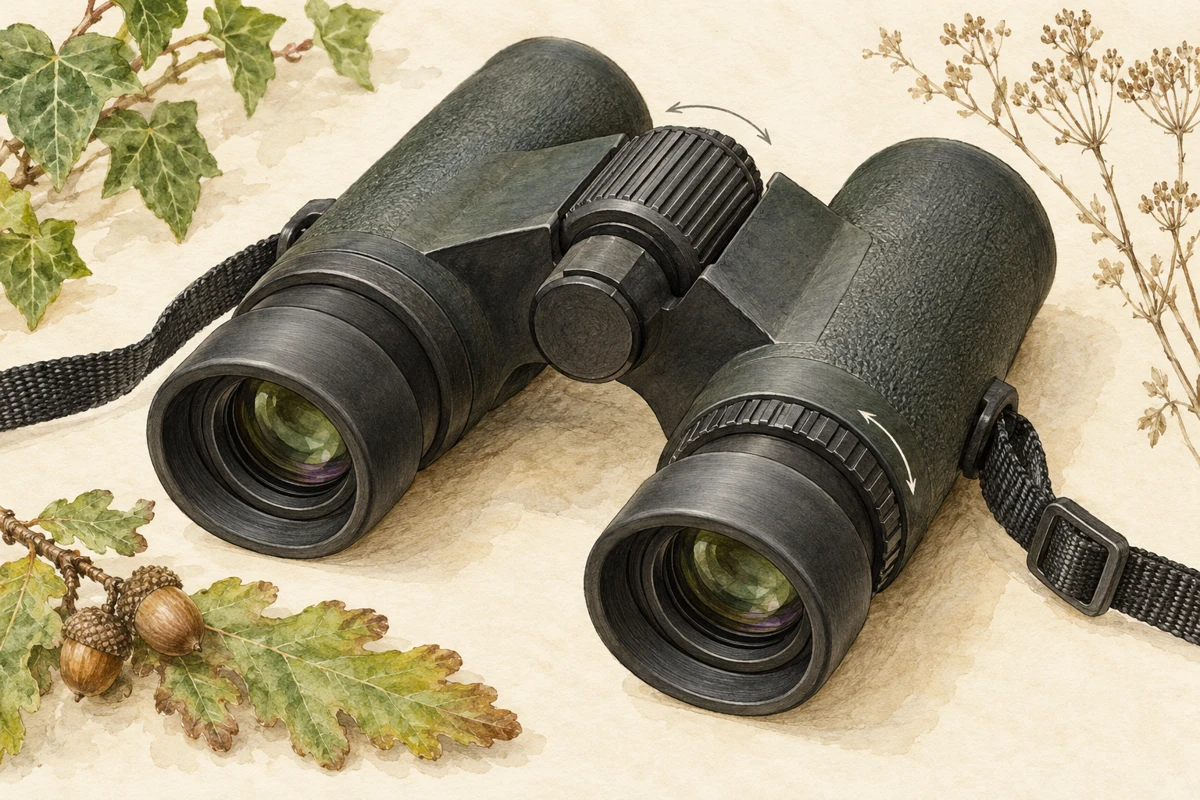
Check the instructions for your model. Most everyday birdwatching binoculars have a central focus wheel and a dioptre control, often on one eyepiece, but arrangements vary. Some have a locking control or a different focusing system. Do not force a ring that will not turn.
Make one circle
Move the hinged barrels closer together or farther apart until the two views overlap as a single round image. If you see two separate circles or a persistent dark crescent, the spacing or eye position may be wrong. Adjust the eyecups according to whether you wear spectacles. There should be no need to push the instrument painfully against your face.
Take a moment to relax your eyes. Squinting can make a poor adjustment feel temporarily acceptable. A comfortable view should remain comfortable when you look for more than a few seconds.
Balance the two sides
On a typical central-focus model with a right-side dioptre, cover the right front lens and use the central wheel to make the left-eye view sharp. Then cover the left front lens and use the right dioptre control to sharpen the same target for the right eye. Keep the main focus unchanged during that second adjustment. Follow the manufacturer's sequence if your control is on the other side or uses a different mechanism.
Covering a lens can be easier than squeezing one eye shut. You are trying to compare two relaxed views, not to train your face into a position you cannot maintain. Once both sides are sharp, uncover them and check the combined image. Note the dioptre setting if it is marked, but do not assume another person's setting should match yours.
After that, the central wheel normally handles changes in viewing distance. Constantly turning the dioptre while following a bird can undo the balance you just established.
If the view still disappoints
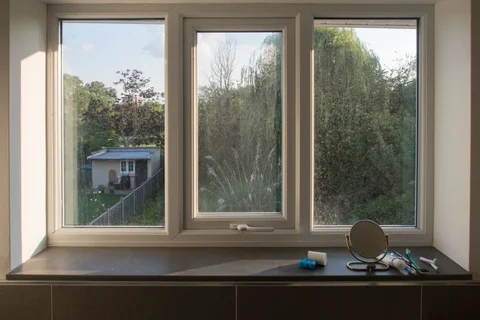
Check whether the target is closer than the binoculars' minimum focusing distance. A bird on the window ledge may be too near even when a tree across the garden is perfectly clear. Move your observation position farther back if appropriate, or watch that close visitor without binoculars.
Look for condensation, a greasy eyepiece or a dirty window before blaming the optics. Clean lenses only by the maker's recommended method; rubbing grit across glass can damage it. Double glazing and viewing at a steep angle can also soften the image. Compare a safe outdoor view of an empty target to distinguish the window's effect from the binoculars'.
If you see a persistent double image, or cannot make both sides comfortable despite correct adjustment, stop using the pair and seek service or advice. Eye strain is not a normal requirement of birdwatching. When sharing binoculars, let each viewer restore their own spacing and dioptre setting rather than simply handing over a supposedly universal adjustment.