Sunflower hearts and the question of leftovers
Removing the husk reduces shell waste, but hearts can still become wet, stale or scattered below the feeder.
No husks does not mean no mess
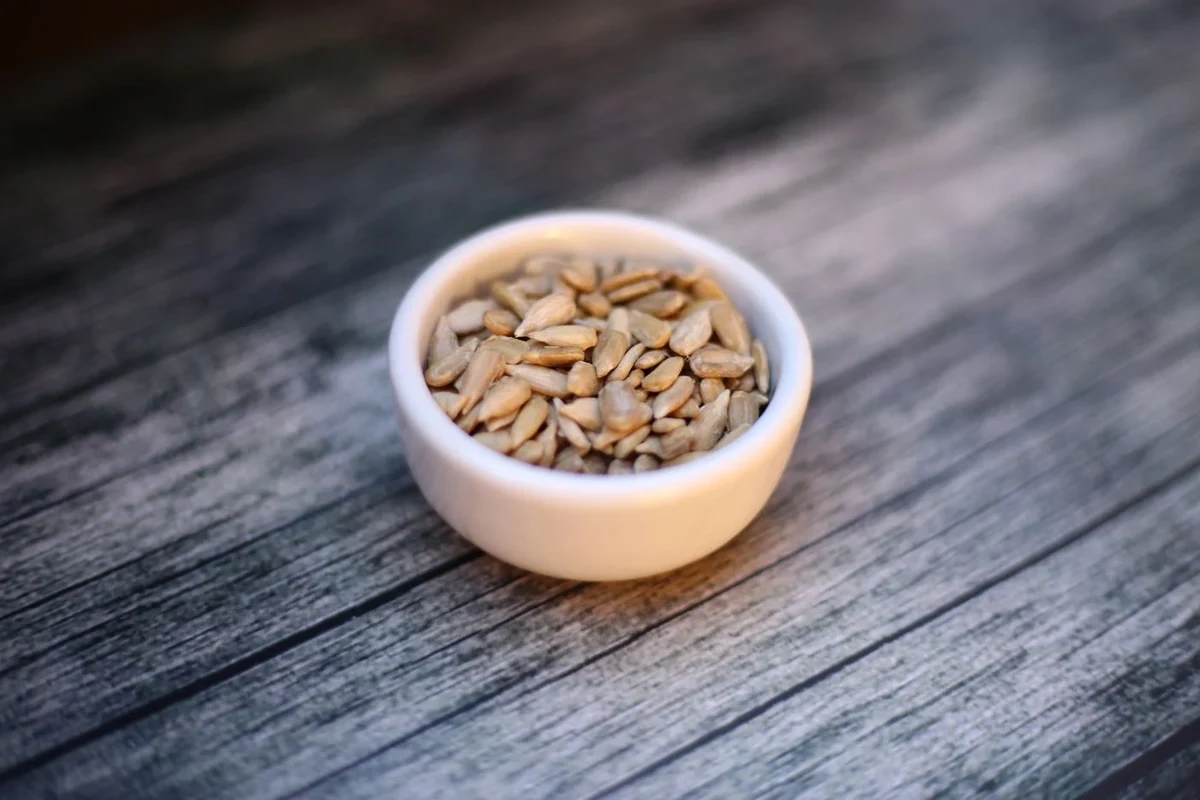
Sunflower hearts leave fewer discarded shells than whole sunflower seed. That can make the feeding area easier to manage, but it does not remove the need to inspect it. Birds can drop pieces, rain can enter a feeder and crumbs can collect around the lower ports.
Treat hearts as seed under the current seasonal guidance: use the November–April period and pause through May–October. A product described as no-mess or husk-free is not outside that calendar.
Start with a small fill
A full transparent tube looks reassuring, yet its appearance says little about how quickly the contents will be eaten. Begin with a modest amount and watch what remains. If the lower section hardly changes, reduce the next fill rather than adding more to make the tube look complete.
Different gardens have different traffic. A neighbour's rapidly emptied feeder is not a serving guide for yours. Weather and nearby natural food also change the picture, so keep the quantity adjustable rather than treating it as a fixed daily ration.
Look at the bottom of the feeder
The last few centimetres deserve particular attention. Fragments can lodge where a removable base meets the tube, and wet material may not be obvious from a distance. Empty and inspect these parts before refilling. Fresh hearts above old residue do not restore the condition of the old food.
Choose a feeder that can be dismantled sufficiently to reach the ports and base. If a tool is required, keep it with the cleaning kit so a missing screwdriver does not become the reason the job is deferred.
Check below, even on paving
On hard ground, leftovers may be easier to see but can also collect in joints or beneath furniture. On soil, they can disappear into the surface while remaining available to birds and other animals. Include both areas in your inspection rather than equating invisible with gone.
Avoid adding a broad collecting tray simply to keep the lawn tidy; current advice discourages flat feeding surfaces. Adjusting quantity and collecting spills addresses the cause more directly.
When hearts repeatedly remain uneaten, pause and review the setup. The answer may be a smaller serving, a different suitable position or no supplementary seed at that time. There is no need to keep supplying a food merely because it is widely described as popular.