Finishes and paint on a wooden nest box
A finish is optional decoration or weather protection, not a reason to coat every surface of the chamber.
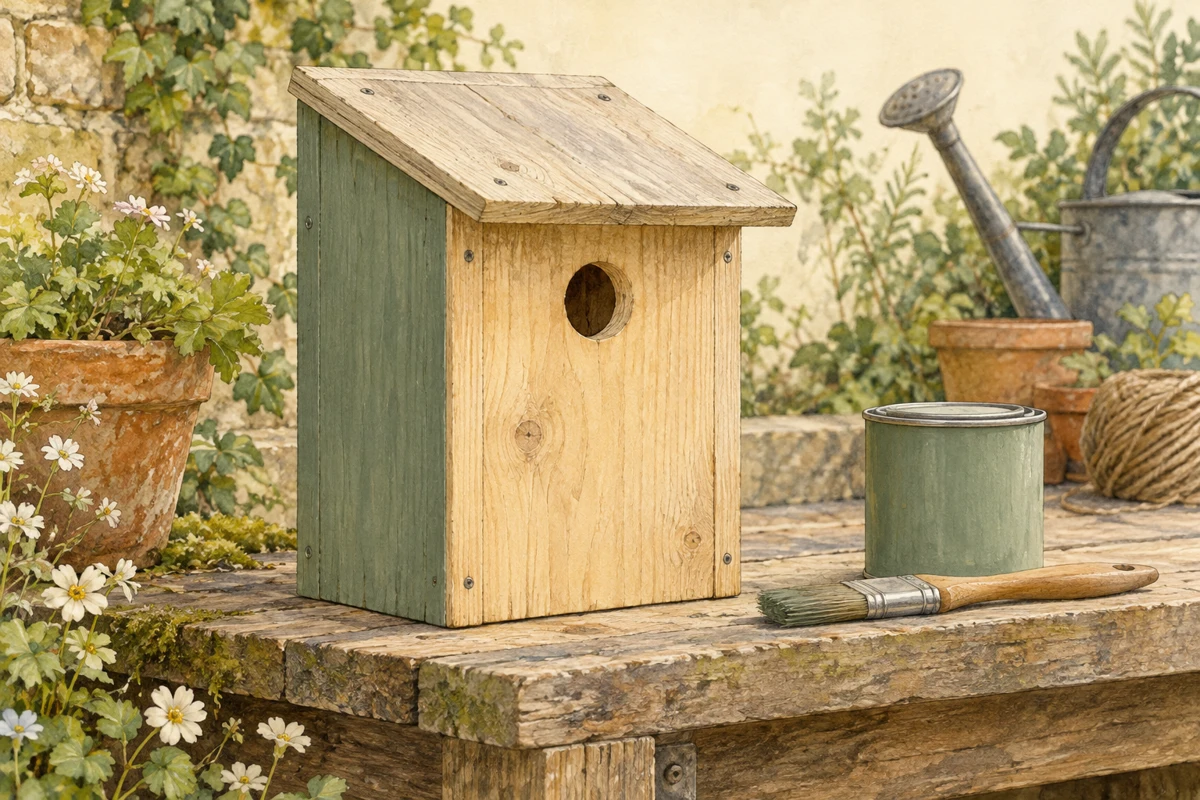
Bare wood can be the right choice
A nest box does not have to match a painted fence. Suitable timber can be left to weather naturally, and a changing surface colour does not mean the chamber has stopped working. Before reaching for a brush, check whether the manufacturer recommends a finish at all.
BTO allows a non-toxic, water-based preservative on the exterior of a wooden box. That broad description is not a guarantee that every product labelled water-based is suitable. Read the full product instructions, including any wildlife precautions, and ask the manufacturer if the intended use is unclear.
Keep the inside uncomplicated
Do not paint the interior, entrance passage or nesting material. A glossy decorative layer inside adds no nesting space and may change the surface birds encounter. Leave drainage and ventilation features unobstructed rather than brushing over them to obtain a uniform finish.
Apply any suitable exterior treatment to a new or definitely inactive box away from birds. Follow the specified drying and curing times before it is put into service. A surface that feels dry under a finger may not have completed the manufacturer's curing process.
Decoration should not disguise faults
Clean and inspect the structure before repainting. A coat of colour can hide a developing split around a fastening or soften the visual signs of decay without making the timber stronger. Repair or replace unsound parts first, keeping the original chamber dimensions.
Avoid attaching trim that creates ledges beneath the entrance or prevents the maintenance panel opening. If children decorate a box, explain which surfaces and openings must remain clear before the activity starts. It is easier to establish boundaries on the workbench than to remove ornaments after birds begin investigating it.
Consider heat and the site
A dark finish in an exposed position is a reason to think carefully about summer heat, but a pale colour does not make a sun-baked site suitable. Shade and shelter remain part of the siting decision. Choose a quiet, appropriate location rather than relying on paint to correct the exposure.
Once birds have begun nesting, postpone repainting and nearby fence treatment. Even work on the surrounding surface can mean repeated close approaches, fumes or accidental splashes. A patch of faded timber can wait until the nesting site is inactive.