A birdwatch that leaves room for children to notice
A short question about what a bird does can be more inviting than a test of its name.
Let the first observation belong to the child
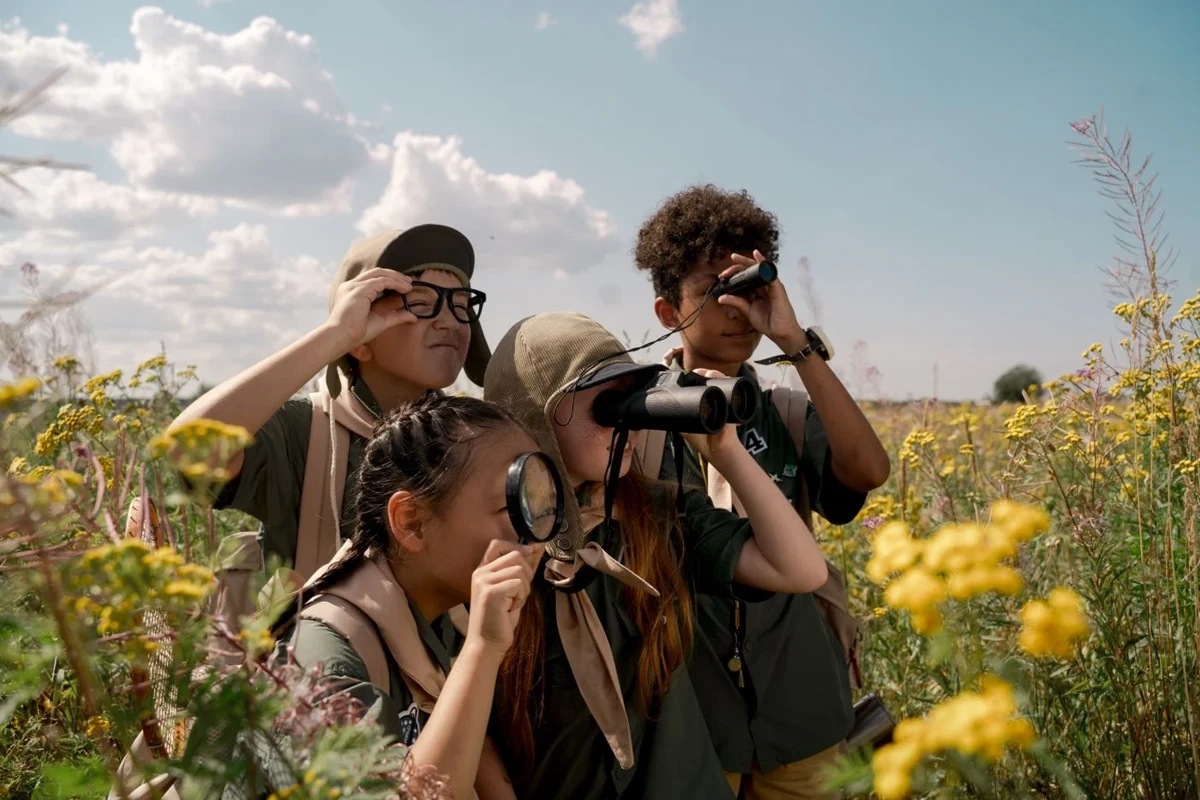
Begin with something visible from a safe, comfortable place. It might be a bird walking on the grass or a shape moving in a tree. Ask what they notice before supplying a name. A comment about hopping, a long tail or a noisy call gives you a way into the encounter without turning it into a quiz.
Keep the first session short enough to finish while interest remains. There is no requirement to stay for an adult's preferred length of time. A five-minute watch followed by drawing one bird can be more memorable than an hour of being told to remain still.
Choose a task with room for different answers
Try finding a bird on the ground and one above it, or noticing two different ways of moving. Children who do not yet recognise species can still make accurate observations. If several children take part, give them different things to notice rather than competing for the largest species total.
A simple outline drawing can capture a long tail or a rounded body. Let labels use the child's own words first, then add the species name together if the identification is clear. Keep a question mark when it is not. Adults can model uncertainty instead of guessing to maintain authority.
Make equipment optional
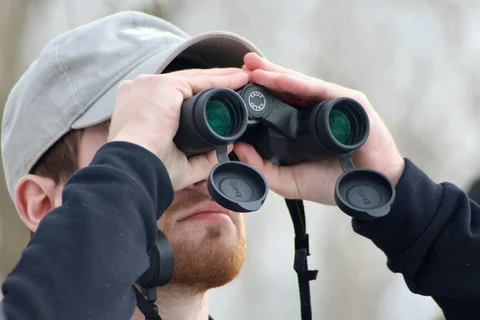
Binoculars need to fit the viewer's eye spacing and be light enough to hold. An adult pair may be uncomfortable for a small child. Practise focusing on a stationary object before trying a moving bird, and supervise any straps according to age and safety needs. Never point binoculars towards the sun.
Watching without optics is perfectly valid. A wide view can make it easier to follow a bird between perches, and there is less frustration when it moves quickly. Share a photograph or guide afterwards rather than requiring constant equipment use.
Explain space in concrete terms
Instead of only saying be quiet, explain what the bird needs to continue doing: searching for food, reaching shelter or carrying food to young. If it stops and watches the group, move back. Do not encourage touching fledglings or finding nests as a reward for careful looking.
Finish with one remembered detail. Perhaps the bird turned a leaf, shook after bathing or disappeared into ivy. A child can carry that observation into the next visit without completing a worksheet or producing a perfect identification. The purpose is to leave room for the next question.
When children notice something unexpected
A question about a bird taking a worm or chasing another bird can interrupt an otherwise cheerful watch. Answer the action plainly at a level the child can follow. Birds need food and space, and their behaviour is not organised around being kind or unkind to one another. There is no need to invent a reassuring story about what happened out of sight.
If a child loses interest in birds and notices a beetle instead, the session has not failed. Follow that observation from the same respectful distance. Learning to describe living things carefully transfers between subjects, and a flexible ending makes the next invitation to watch more appealing.