Signs of a great spotted woodpecker
A sharp call, a brief drum or a patterned back may reveal the bird before you see its face.
A sound from the tree
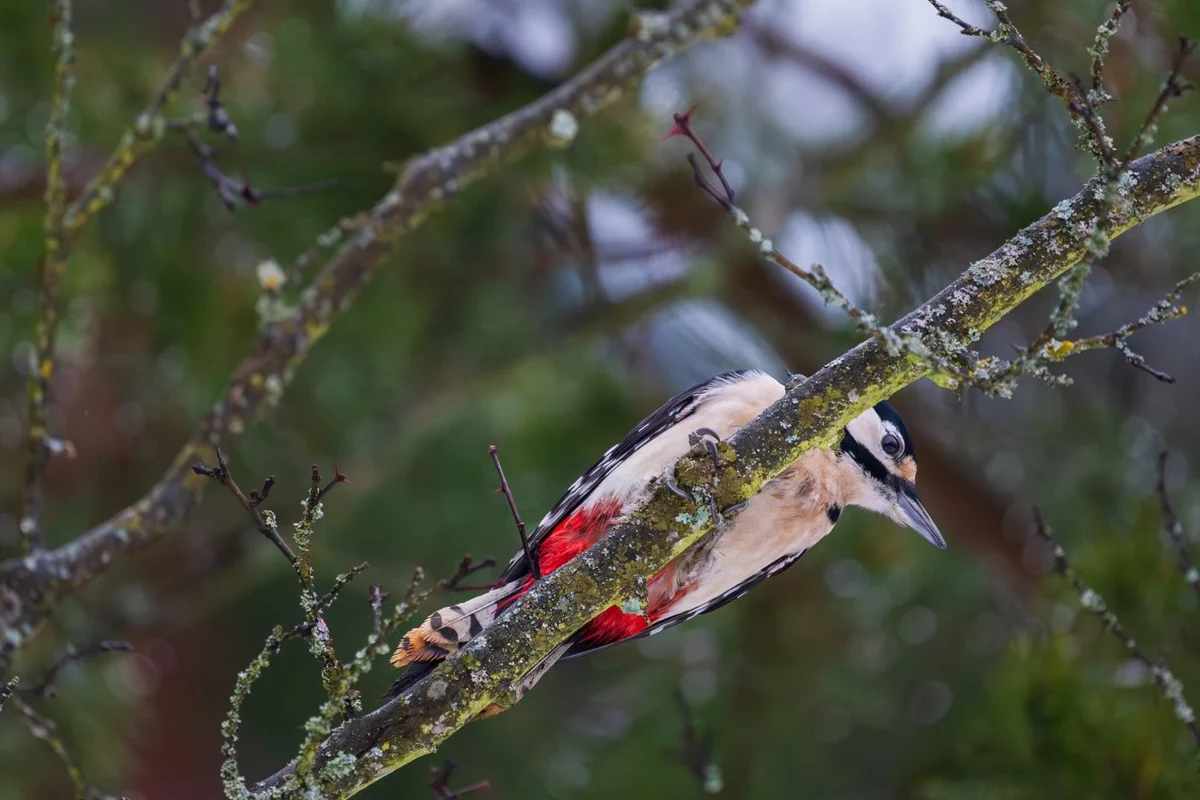
Listen for a sharp call or a short burst of drumming, then look along trunks and substantial branches. A great spotted woodpecker can remain partly hidden behind the wood it is using. Instead of circling the tree, wait at your existing viewpoint. A bird working around the trunk may bring itself into view.
The bold black-and-white pattern, large pale shoulder patches and red beneath the tail are useful adult features. An adult male has red at the back of the head, while a juvenile has a red crown. That young bird can confuse observers expecting every great spotted woodpecker to have a plain crown. Check age-related illustrations before deciding it must be another species.
Drumming is not just feeding noise
A rapid resonant drum is a form of communication. It should not automatically be described as a bird excavating a meal. Watch whether the bird repeats a short burst from one place or moves while probing the wood. The difference in action helps interpret the sound.
A simple recording from a distance can preserve the rhythm. Add a note about whether you saw the bird making it. Sound can carry between gardens, and a visible woodpecker is not necessarily responsible for every tap you hear nearby.
Read signs cautiously
Chips, holes and damaged bark can suggest woodpecker activity, but they do not identify the maker by themselves. Old damage may remain long after the bird has moved on. Photograph the sign from ground level if useful, and avoid probing cavities or stripping bark to inspect it.
If you notice repeated food-carrying journeys to a hole, move away rather than waiting directly below it. A blocked approach can delay feeding even when the observer is quiet. The same applies to a camera set beside an entrance: distance is not replaced by silence.
Keep the wider view
A garden sighting often depends on trees beyond the boundary. Note whether the bird arrives from neighbouring woodland, uses a mature tree briefly or stays to search. Those observations help explain why the species appears intermittently.
Leave decaying wood where it is safe to do so, but seek qualified arboricultural advice for potentially hazardous trees. Wildlife value does not make a failing branch safe above a path. The useful question is how to retain habitat responsibly, not whether every piece of dead wood must either remain untouched or be removed.