Jackdaws and their pale eyes
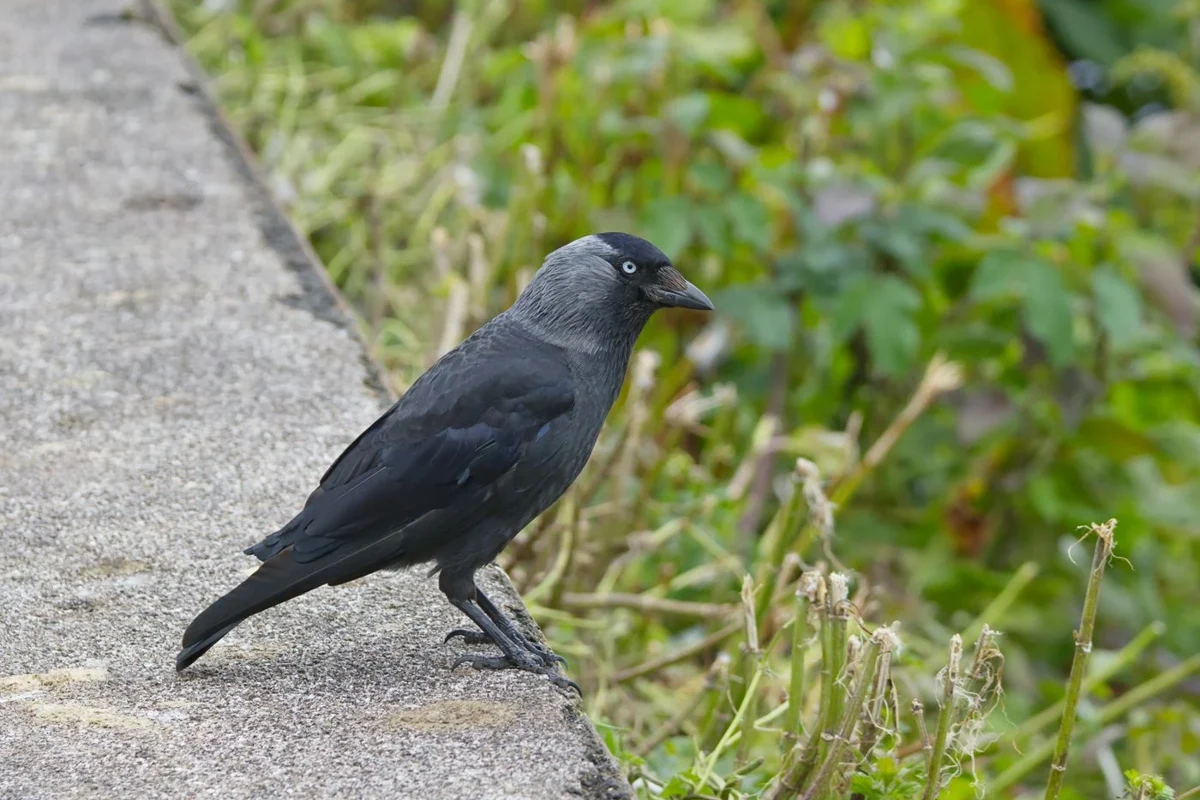
A pale eye and grey nape separate this compact crow from its larger neighbours.
Look at the head first
An adult jackdaw's pale eye can stand out sharply against its dark face. Add the grey nape, relatively short bill and compact build, and the identification becomes much easier. Young birds have darker eyes, so eye colour must not be used as the only test. Compare the whole head and body when the bird is in view.
Jackdaws often appear around buildings and open ground. A roofline can offer a useful profile, while birds walking on grass reveal their proportions against more familiar objects. Large crows farther away can appear the same size, so avoid comparing birds at different distances as though they were side by side.
Follow a pair without naming it
Two birds moving together may pause, call and change direction in close succession. Watch the sequence: which bird leaves first, whether the second follows directly, and where both settle. These details are visible without assuming a relationship or giving them permanent identities.
The sharp calls can also help you notice birds passing overhead. Once you know the sound, try looking for the flight silhouette before reaching for binoculars. A quick crossing may provide only a broad shape and a call, which is sometimes enough for a confident record and sometimes not.
Buildings need care
Jackdaws can nest in cavities, including chimneys. If you suspect a nest in a chimney or vent, do not investigate by lighting a fire or blocking the opening. Keep the appliance unused until a competent professional has assessed the situation, and obtain advice about nesting birds before any work. Fire safety and wildlife protection both matter.
For ordinary birdwatching, observe from ground level and leave cavities alone. Repeated journeys with nesting material can be recorded without finding the exact depth or position of a nest.
Larger gatherings at dusk may be travelling towards a communal roost. Watch from a public path or your own property rather than entering the roosting area. Birds settling for the night need space, and a good view of their arrival does not require standing beneath them. Record direction and approximate numbers if counting becomes difficult.