What to do when birds look unwell
Pause the gathering point, record what you see and seek appropriate help. Appearance alone cannot identify the disease.
Describe the behaviour you can see
A bird that remains fluffed up, struggles to swallow, looks unusually lethargic or has wet material around its beak may be unwell. Those signs are a reason to respond cautiously, not a diagnosis of trichomonosis or any other specific condition. More than one illness or injury can produce a similar outward appearance.
Observe from a distance and note the date, species if known, number of affected birds and behaviour. A photograph taken without approaching may help an adviser. Do not chase the bird to obtain a clearer image or repeatedly test whether it can fly.
Stop the feeding point immediately
Remove supplementary food and clean the equipment, then put it away. The current RSPB advice is to wait four weeks before resuming feeding, repeating the pause if further sick birds appear. Do not treat a newly washed feeder as a reason to restart the next morning.
The purpose is to reduce repeated close gathering while disease may be circulating. Changing from seed to another food at the same station does not achieve that. Tell other people who share the feeding routine, so the empty hook is not refilled with good intentions.
Garden Wildlife Health also advises leaving bird baths empty while further sick or dead birds are being seen during a suspected outbreak. Clean the container and follow the current advice about reintroducing water. Ordinary daily water care is different from managing a possible disease incident.
Keep cleaning separate from household life
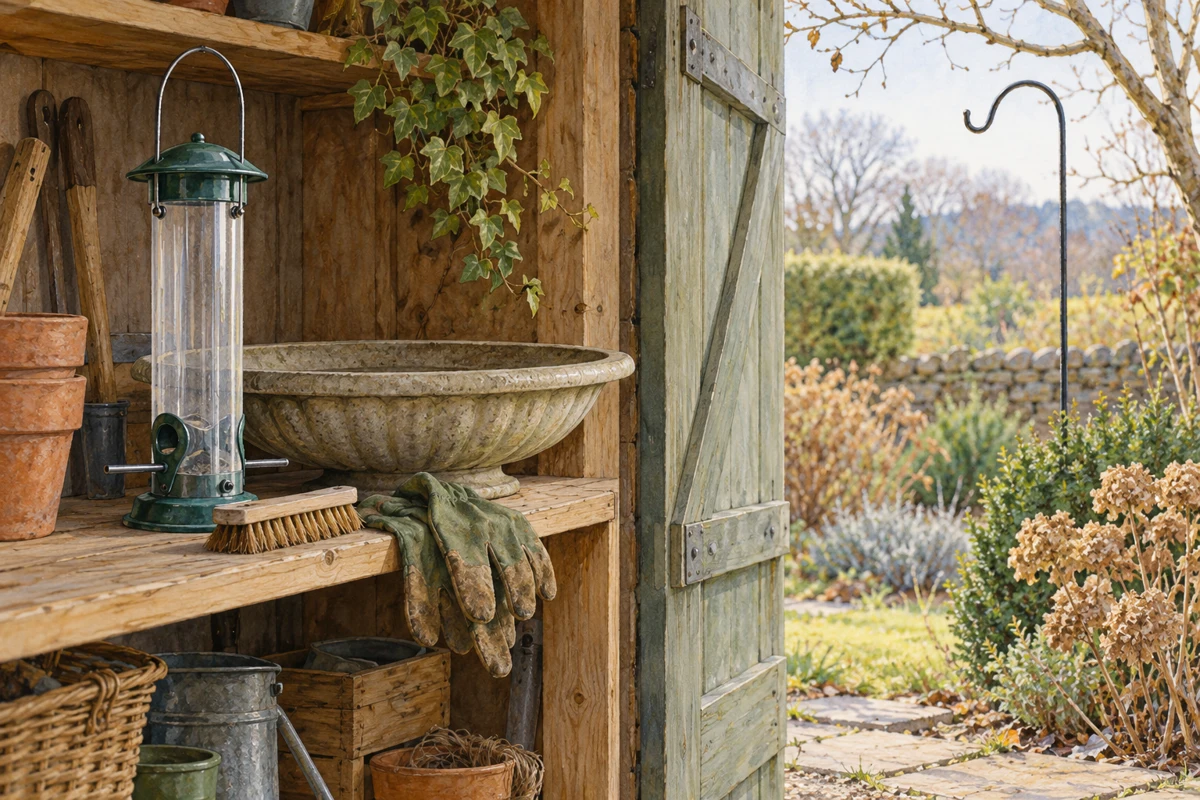
Use outdoor-only equipment and gloves, and wash your hands afterwards. Avoid touching sick or dead birds with bare hands. Keep pets and children away from the immediate area and do not bring a contaminated feeder into the kitchen sink.
Follow a suitable cleaning product's instructions rather than mixing chemicals or applying a stronger solution in an attempt to solve the problem quickly. The equipment needs cleaning, rinsing and drying, but chemical treatment of the garden or of free-living birds is not the answer.
Know which help you need
For a living bird whose welfare is in immediate doubt, contact a local vet or an established wildlife rescue for advice before handling it. Describe whether it can move away from threats and where it is. Follow their assessment rather than assuming every quiet bird should be captured.
Report garden wildlife illness through Garden Wildlife Health, which gathers information about disease incidents. If dead birds raise a concern about avian influenza, use the current government reporting guidance for your UK nation; the reporting routes and criteria are not identical everywhere. Do not transport a carcass to a clinic without first asking what to do.
Do not add antibiotics, parasite treatments or other medicines to a communal feeder or bath. You cannot control which bird receives them or the dose, and an apparent symptom does not establish what treatment is appropriate.
Prepare information before making contact
A concise report can separate what is known from what is suspected. For example: two finch-sized birds appeared inactive beside the feeder on Tuesday, one had material around its beak, and food was removed that morning. Include any later sightings with dates. Avoid calling every bird the same individual unless you have a reliable way to distinguish it.
Keep original photographs if you have them, but do not collect droppings or bodies for testing unless the receiving organisation specifically requests this and explains safe handling. Your first responsibility is to stop the shared feeding point and obtain appropriate guidance. A report can still be worthwhile when the species identification is incomplete or no photograph was possible.
Restart slowly, if the advice allows
When the required pause has passed and no further signs are being seen, check the seasonal calendar before putting food out again. A disease pause ending in summer does not cancel the separate seed and peanut pause.
Begin with a small, manageable supply in clean equipment and watch for renewed signs. If illness returns, stop again and seek further advice rather than treating repeated outbreaks as an unavoidable part of feeding. Keep your notes: a clear record of dates and observations is more useful than trying to reconstruct events after several weeks.