Making a balcony quieter and greener
Start with safe planting and observation; a feeder or nest box is not compulsory.
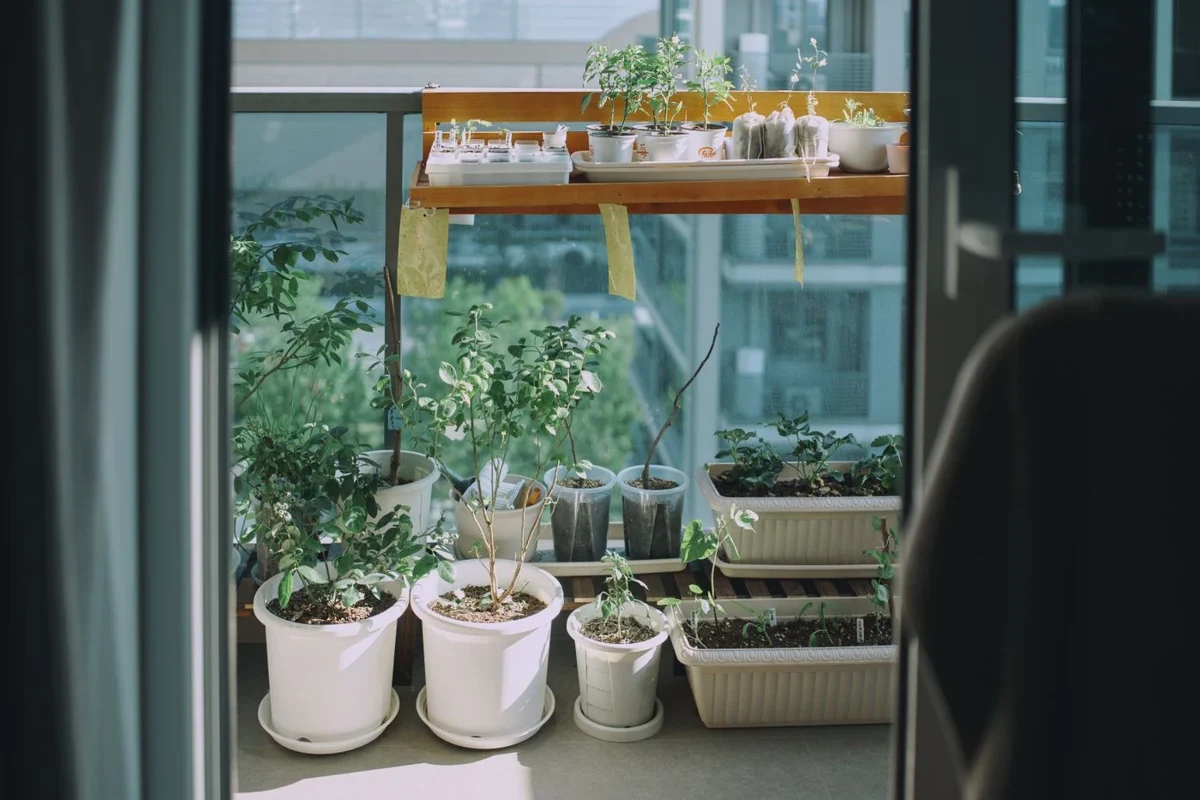
A balcony can be a place to notice birds without being a place to attract large numbers of them. Watching rooflines, trees and the air above the street is already worthwhile. Greening the balcony can add something to that view, but the first decisions concern the building and the people who use it.
Check permissions, load limits and restrictions before adding heavy containers or attaching anything to rails and walls. Wet compost and water are heavy. A few small pots can become a substantial load when a whole balcony is filled. Ask the building manager or a qualified professional where needed; do not estimate structural capacity from how solid the floor feels.
Keep everything inside the boundary
Secure containers so they cannot fall or be blown over, and keep escape routes clear. Do not balance a bird bath or feeder on an outer rail. A falling object creates risks for people below, and loose material can cause nuisance for neighbours.
Choose plants for the actual exposure. High balconies may be windy, while a recessed one can be shaded and sheltered. A plant described as suitable for a garden may struggle in either extreme. Start with a modest number that you can water and maintain, then see how the space behaves through a season.
Think about the glass
Large balcony doors and transparent balustrades can be difficult for birds to recognise. Before encouraging closer visits, assess reflections and see-through routes. Appropriate external markings or other proven treatments may be needed, subject to building rules and safe access. A single decorative sticker does not make an entire pane visible.
Avoid using loose netting as a casual solution. Netting that can entangle wildlife or obstruct safe access introduces another problem. If the building requires specialist bird management, raise it with the responsible manager rather than improvising a barrier.
Let the balcony remain quiet
You can enjoy flowering plants and insects without adding a feeding station. Feeders create hygiene and spillage responsibilities that may be difficult to manage in a shared building. The best choice may be to leave feeding out of the plan entirely.
Keep binoculars near an indoor seat and observe from there. Note which trees the birds use and how the pattern changes with the weather. A balcony can offer a broad view of a neighbourhood's wildlife without turning its small floor area into a crowded imitation of a garden.