What a hawthorn brings to a small garden
Blossom, haws and dense branching make this a tree worth planning around rather than squeezing in.
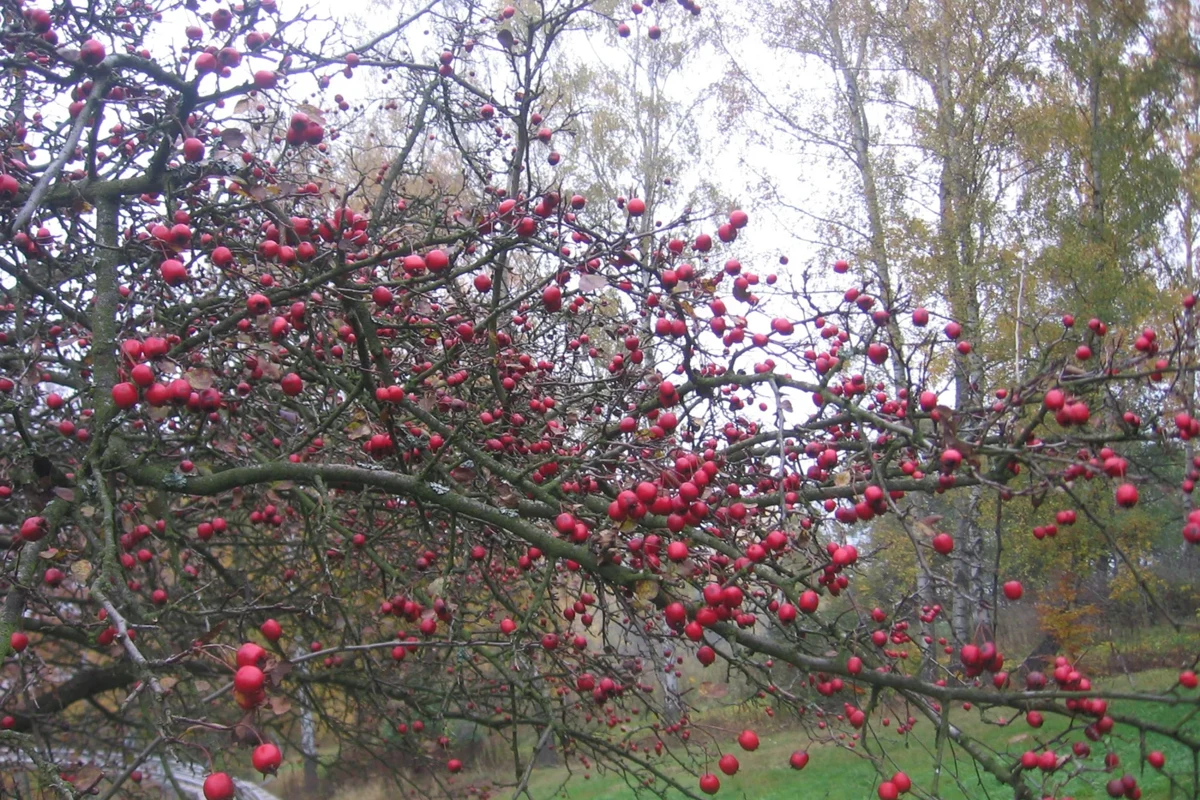
Hawthorn is easy to overlook when it is clipped into a boundary. Allowed to develop, it becomes a tree with a changing character: fresh leaves, pale blossom, then haws among the autumn foliage. Those changes give a garden more than a single season of interest.
Common hawthorn, Crataegus monogyna, is a British native with thorny branches and small lobed leaves. The Woodland Trust describes its importance to a wide range of wildlife. In a garden, the useful question is how much of that structure you can retain. A plant continually cut to fit an unsuitable corner may never offer the blossom and fruit you expected.
Tree or hedge plant?
Decide which form you want before planting. A specimen tree needs room for its crown, while a hedge is managed as a boundary. Do not judge the eventual scale by a bare-root sapling. Compare the proposed position with doors, paths, overhead services and neighbouring property. If the space is uncertain, ask a nursery about an appropriate alternative rather than assuming all native trees stay small.
The thorns deserve thought near a narrow passage or children's play area. They are part of the plant, not a defect to solve later by removing every low branch. Place it where growth can remain without turning routine use of the garden into a pruning job.
Let the fruit become part of the year
Once a hawthorn is established, watch the developing fruit rather than expecting it to disappear on a fixed date. Birds may use one tree while leaving another apparently untouched. Weather, other food sources and the movement of birds all affect what you see. A tree with remaining haws is not automatically failing as a wildlife plant.
Record a few dates: the first open flowers, the first red fruit and a day when birds are feeding in the crown. These observations are more informative than a one-off photograph of a full tree. Avoid cutting fruiting growth simply to make the tree look identical from week to week.
Routine care still matters. Keep a young tree watered as needed while it establishes, inspect its stake or tie and seek advice about structural problems. Wildlife value is not a reason to ignore an unstable tree. The aim is to keep a living tree in a suitable place for years, so that its seasonal resources become a dependable part of the garden.