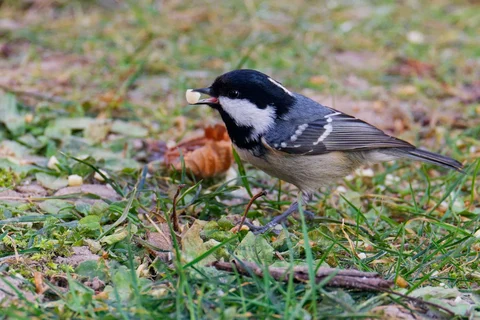
The great tit and its changing calls
A two-note song is a useful introduction, but this bird has more than one voice.
Start with the singer you can see
An insistent two-note phrase can make a great tit sound easy to learn. The complication comes when the same species produces a sound that seems entirely different. Rather than memorising a single written imitation, try linking a visible bird with its voice. Watch for the bill opening and the throat moving at the same time as the notes. A bird perched nearby is not necessarily the singer.
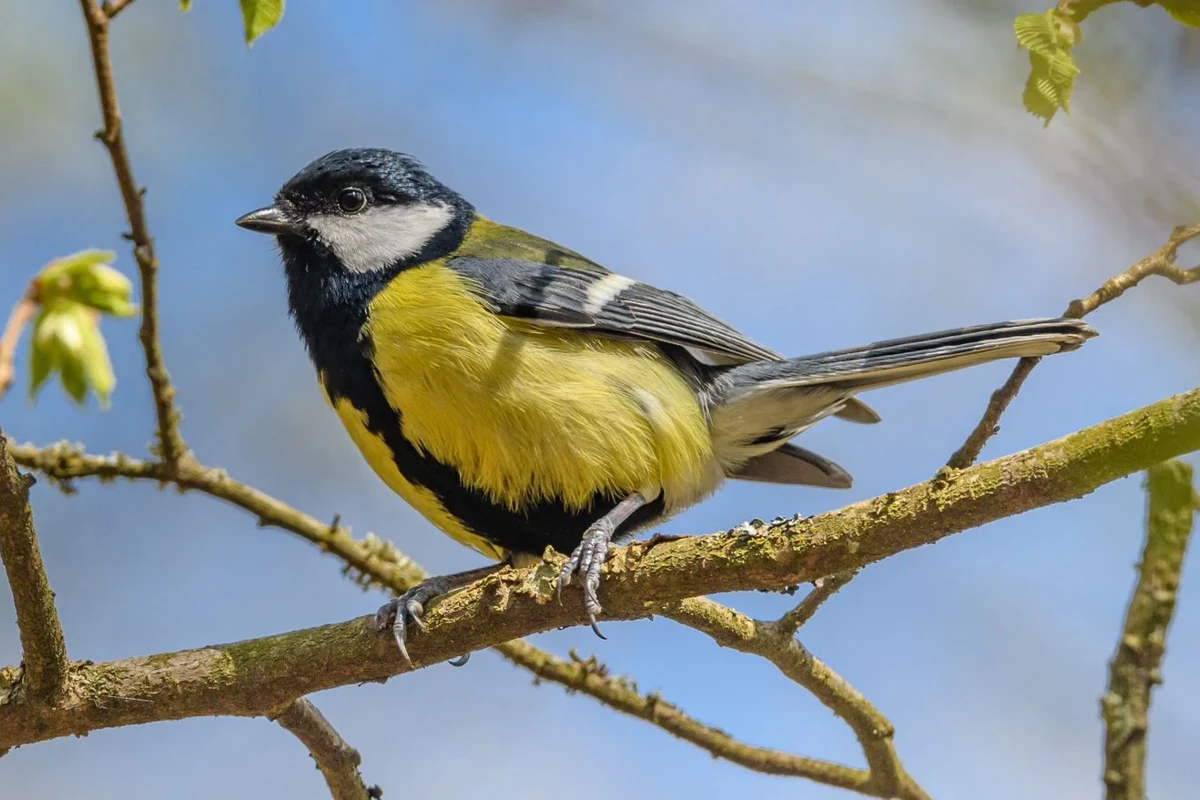
The adult has a black head with white cheeks and a dark stripe down its yellow underside. It is more substantial than a blue tit, with a different balance of head and body. From behind, the face and breast can disappear completely, so wait for a turn before deciding. A photograph that shows only a greenish back has left out the most useful clues.
Put a sound into your own words
Write down rhythm before pitch. Two notes alternating steadily are easier to recall than a description such as high-pitched. Add whether the phrase stops abruptly, repeats without a break or changes after several repetitions. Your spelling of a sound does not have to agree with a field guide. It only has to remind you what you heard.
For example, you might write: repeated pair of notes, second lower, from the top of the apple tree. Later, listen to a reference recording indoors. Compare its structure with your description rather than trying to force the memory to match. If the match is weak, leave a question mark. Recording uncertainty is part of learning a call, not a failed attempt.
Avoid playing the reference back into the garden to get an answer. A bird responding to a recording has changed its behaviour because of your presence. Quiet listening gives you a better picture of what it would otherwise be doing.
Follow changes through the year
During winter, great tits may travel with other small birds. In spring, singing from a prominent perch becomes much easier to notice. These are different windows into the same species, and a quieter week does not establish that it has left the area.
Choose one place and listen briefly on several mornings. Note wind and traffic as well as birds. A busy road can hide the softer parts of a phrase, while strong wind can make the source hard to locate. Those details help explain why yesterday's apparently obvious identification feels less certain today.
A bird entering a hole or box does not need a closer inspection. Stay with the sounds and the activity visible from a distance. The nest itself can remain out of sight.