Looking closely at a greenfinch
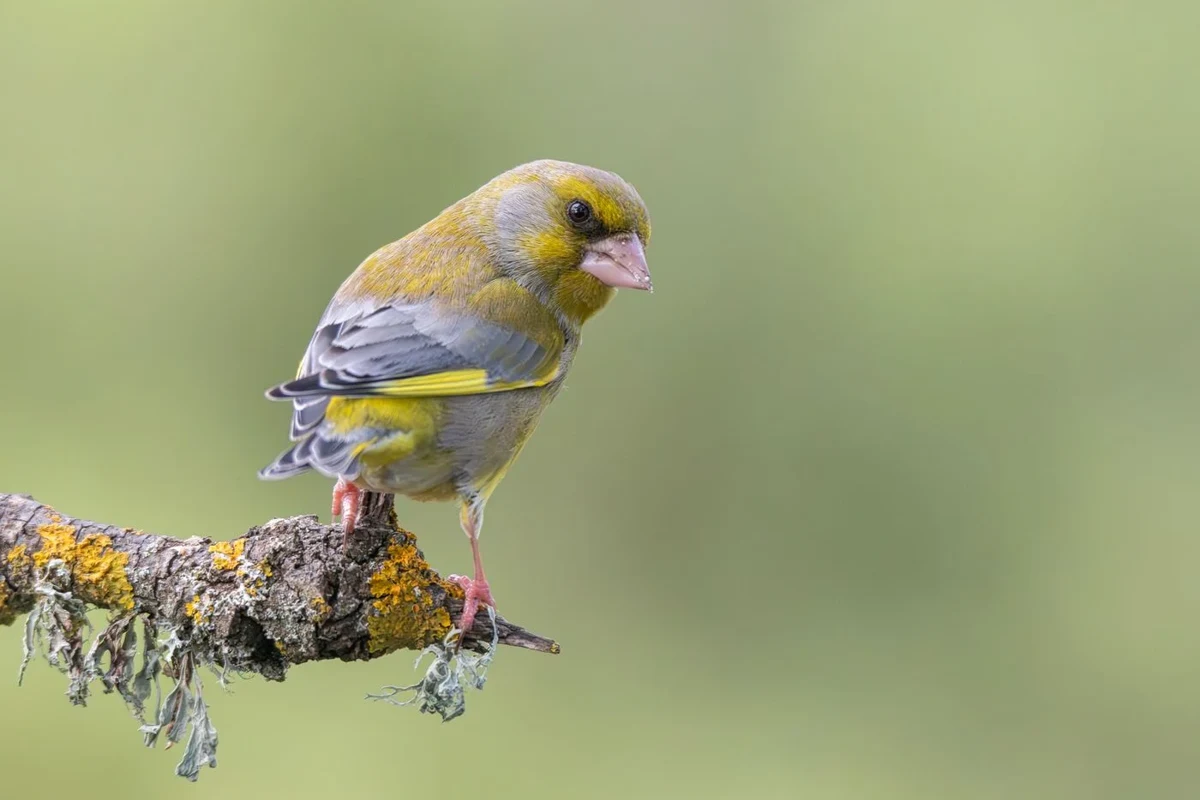
Look for the heavy bill and yellow wing edge, including on birds that barely look green.
More than a green colour
The name can mislead a beginner. An adult male greenfinch may show conspicuous green and yellow, but females and young birds are duller. The substantial, pale bill and broad-headed outline are useful starting points. Look for yellow in the wing and tail as supporting features, especially when the bird turns or flies.
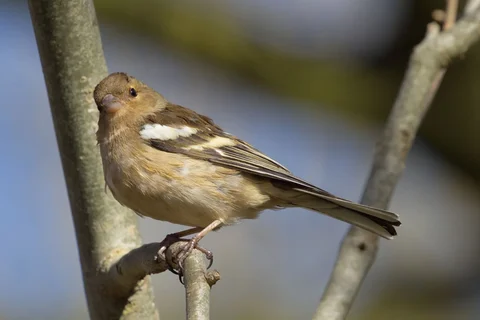
Compare a side view with the much more delicate proportions of a goldfinch. A chaffinch has a different pattern of pale wing markings. Do not make the decision from a yellowish blur alone; reflected foliage can add green tones to many birds in a photograph.
Listen for the rough edge
Greenfinches have a varied voice that can include a drawn-out wheezing sound. Listen to an identified bird if you can, then make a note about the texture and length of the sound. A written imitation is useful only if it helps you recall what you heard. There is no standard spelling that makes identification automatic.
During a short watch, separate singing from feeding. A bird on an exposed twig may offer the clearest profile, while one partly hidden in a conifer may be harder to see but reveal more about where it spends time. Both are valid sightings. Avoid moving around repeatedly to force the bird into a clear background.
A sighting has a wider context
Greenfinches have suffered serious declines associated with trichomonosis. That does not mean every quiet or puffed-up bird has the disease, and it does not justify handling a bird to inspect its mouth. Record concerning behaviour and seek current advice from wildlife health organisations or a qualified rescue service.
If you provide food, follow current seasonal guidance rather than older all-year seed-feeding instructions. The RSPB now recommends pausing seeds and peanuts between 1 May and 31 October, avoiding flat feeding surfaces, and keeping equipment clean. Feeding a larger quantity is not a response to seeing an unwell bird.
For ordinary observations, keep a simple record of dates and the highest number seen together. A single busy day cannot establish recovery, just as an empty week cannot establish disappearance. Repeated, consistently made records are more informative than either impression, especially when shared through an appropriate bird-recording scheme.
Record a concern without attempting a diagnosis
A useful health note describes what the bird did: repeatedly tried to swallow, remained in one place while others moved, or had visible material around the bill. These are more informative to someone advising you than looks sad. Record the time and, if possible without approaching, take a clear photograph. Do not chase the bird to obtain a better one.
If it appears unwell, stop treating the encounter as an identification exercise. Consult current guidance on suspending feeding and managing shared water points, and contact an appropriate wildlife service when an individual needs help. Do not add medication to communal food or water. You cannot control the dose, identify every visitor or establish the cause that way.
For ordinary healthy sightings, the record can remain much simpler. One greenfinch heard singing in the conifer and two seen together on a branch are distinct observations. Neither requires a detailed health commentary merely because the species has faced disease-related decline.