Recognising chaffinches away from a feeder
The wing pattern is often a better starting point than the colour of the breast.
The flash that gives it away
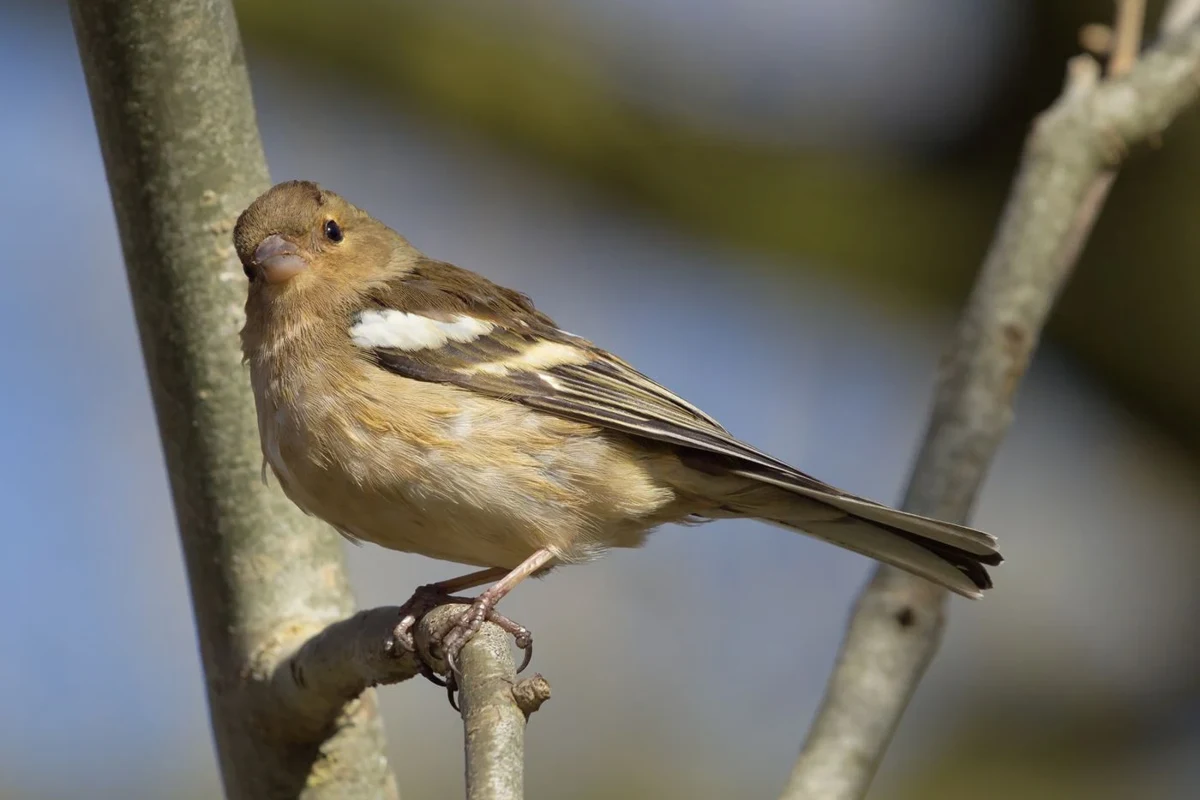
A chaffinch feeding quietly on the ground can blend into fallen leaves. When it moves, the pale wing markings become much easier to notice. In a settled bird, look for the contrasting white patch and bar on the folded wing. These are useful in both sexes, unlike the warm pinkish front and blue-grey head most associated with an adult male.
Females are more subdued, with brown and buff tones. A photograph of the back can therefore be difficult to interpret if the wings are hidden. Wait for a side view and check the whole pattern rather than choosing the nearest brown bird in a guide.
Watch a small patch of ground
Instead of scanning the entire garden, choose a border edge or a stretch beneath a tree and give it a few quiet minutes. A chaffinch may become visible only when it steps into a lighter patch. Follow the movement gently with your eyes before raising binoculars; an abrupt search through magnified leaves can lose the bird immediately.
Try noting how long it remains in the open and where it goes afterwards. These are simple observations, but they explain more about the garden's use than a list of feeder visits. There is no need to put food on the ground to create a sighting.
Song and uncertainty
A chaffinch's song is another route to recognition, but an unfamiliar call can be less straightforward. Listen to a visible bird when possible and compare recordings later. If the sound comes from a dense canopy, record it as uncertain until you have enough evidence. A nearby chaffinch does not prove that every call in the tree comes from it.
For a notebook entry, include the wing markings and the setting: pale shoulder patch and wing bar, feeding along the beech leaves. This gives you something to review when a similar bird appears. Colour descriptions alone can drift with light, camera processing and memory.
If you see a bird that remains fluffed up, has difficulty feeding or seems persistently unwell, do not try to diagnose it from appearance. Consult current wildlife health guidance and keep feeding equipment hygienic. A species identification and a health assessment are different questions.