The social life of house sparrows
The sound inside a hedge can tell you where a sparrow group spends its time, even when few birds are visible.
A hedge with a soundtrack
A dense hedge can seem to chirp without revealing a single bird. House sparrows often gather in cover, emerging in short movements before disappearing again. Watch the edge of the vegetation rather than searching deep inside it. A fence rail or outer twig may become a brief stopping place as birds move between shelter and feeding areas.
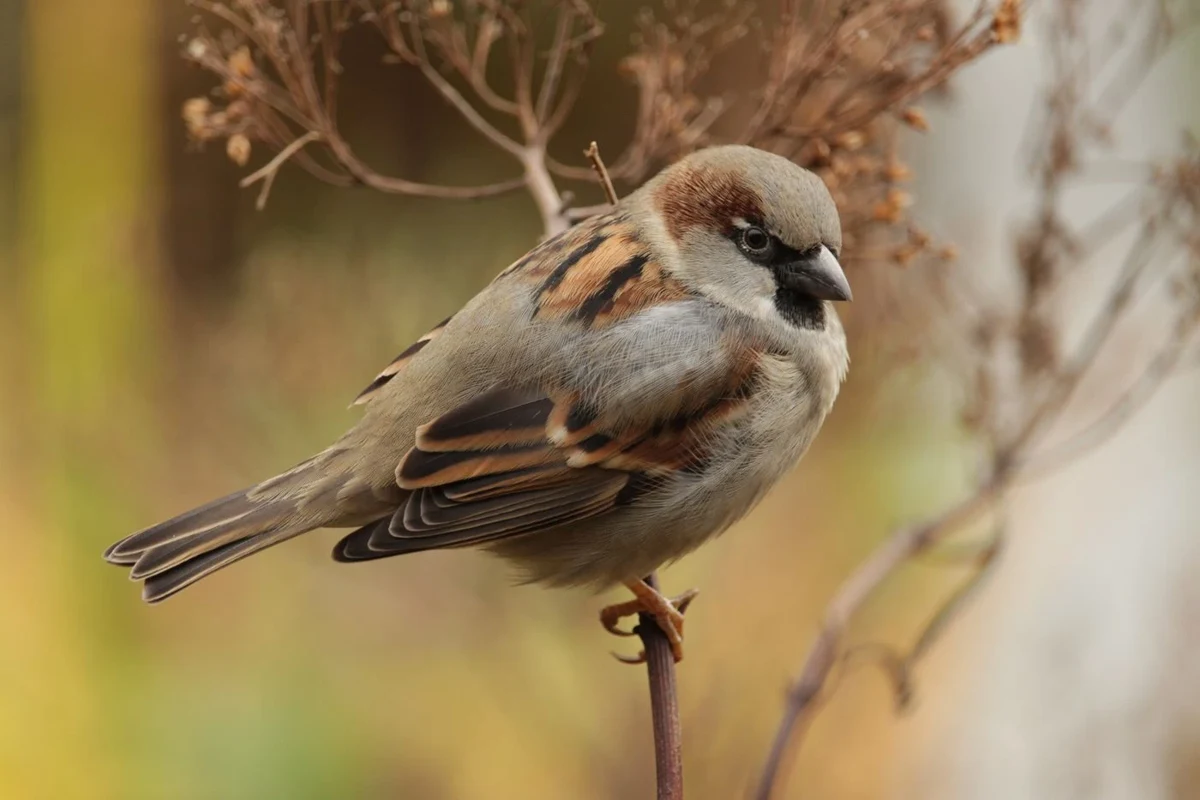
Adult males have a grey crown, chestnut tones around the head and a dark bib. Females are more subdued, with a pale eyebrow and brown, streaked upperparts. Young birds can resemble females. A whole group does not need to look identical to be the same species, and a dull bird should not be dismissed as impossible to identify.
Compare the bill and the pace
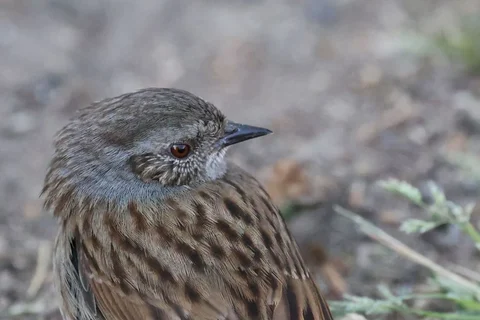
A dunnock beneath the same hedge may be mistaken for a sparrow. Look for its slimmer bill and greyer head, then compare its quieter ground-level movement with the activity of the group. Behaviour alone is not enough, but it can direct your attention to the details that matter.
Try watching the same patch for five minutes without counting. Notice which birds remain low, which move together and where they pause. Then make a separate count of the largest number visible at once. Keeping observation and counting distinct can reduce the urge to label every movement as another individual.
If several birds disappear into the hedge, do not shake branches to reveal them. Hidden birds are part of the observation. A count is allowed to be incomplete.
Buildings and cover belong in the same picture
House sparrows use cavities in buildings as well as suitable boxes. An established group may depend on both nesting opportunities and nearby vegetation. If building work is planned, investigate the possibility of nesting birds before work begins and seek appropriate advice. An occupied cavity must not simply be blocked because it is inconvenient.
From a safe distance, note regular approach routes rather than inspecting holes. A bird waiting with food may be reluctant to proceed while you are nearby. Move away and allow it to enter.
For a garden diary, record the group across the seasons without treating the largest day as its permanent population. Birds move between neighbouring properties, and visibility changes with foliage. Repeated observations can show that a hedge is well used even when they cannot tell you exactly how many sparrows live nearby.
A change at the boundary
Before replacing a fence or reshaping a hedge, spend time watching how sparrows cross that part of the garden. The birds may use a dense section as a staging point before moving to a building. A new gap or a much lower hedge can alter that route even though the nesting cavity itself remains untouched. Record the existing use and plan work outside active nesting, with appropriate advice where nests may be affected.
This does not mean every branch must remain exactly as it is. It means the decision starts with knowing what the structure does. A mixed boundary with shelter and connected planting offers different possibilities from an exposed fence with isolated pots. If space is limited, retaining one useful dense section may matter more than adding several decorative features that birds do not use.
Watch again after any lawful, appropriately timed work. Compare routes and cover use without claiming that a single change caused every difference in the group. Neighbouring gardens and seasonal movement remain part of the picture.