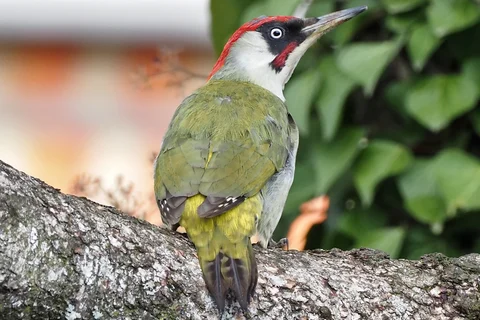
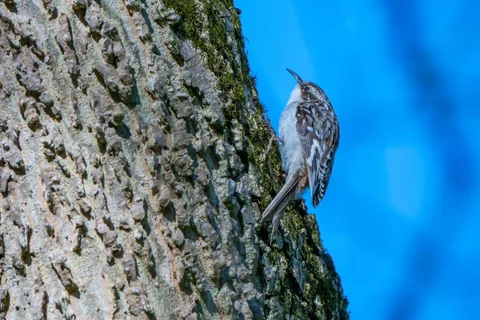
A nuthatch moving head-first down a trunk
The direction of travel is striking, but look at the bill and face before naming every trunk-climbing bird.
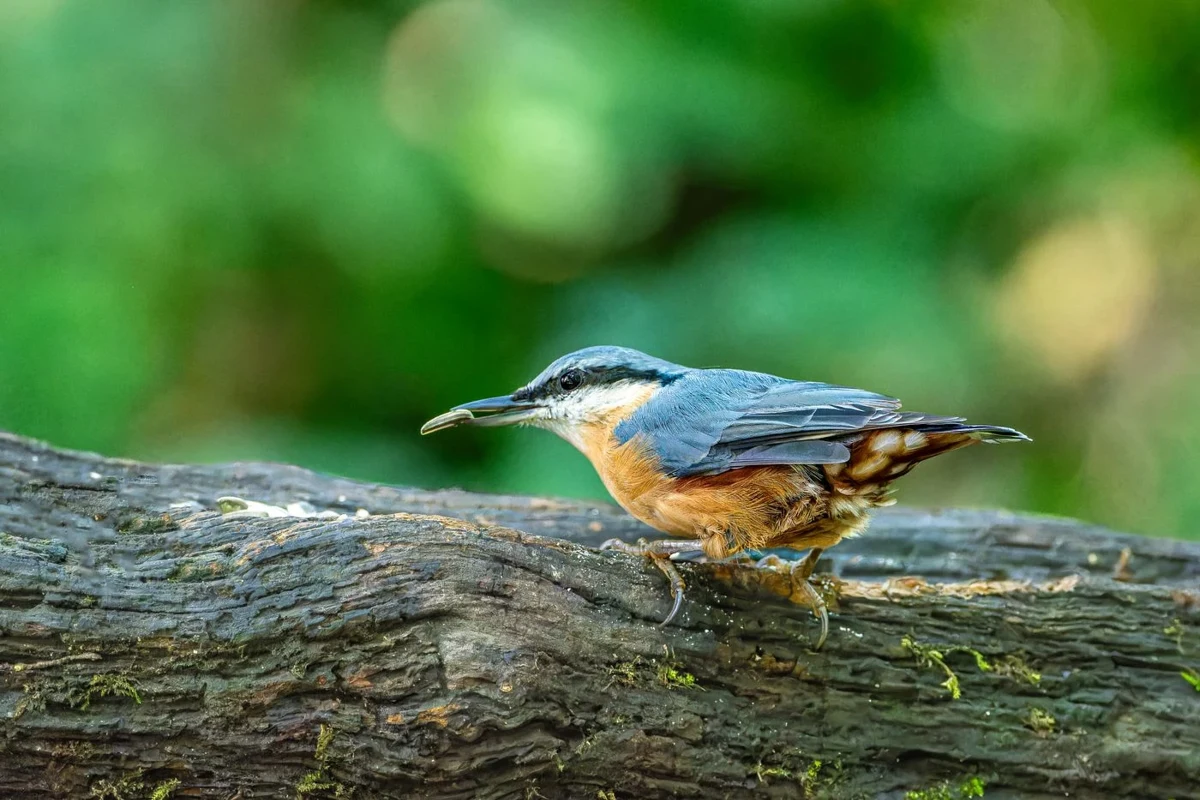
Head first
A nuthatch moving down a trunk can look as though it has ignored the usual rules. Its compact body, strong pointed bill, blue-grey back and dark eye stripe make a distinctive combination. Warm-toned underparts are visible when it turns sideways. The head-first descent is a useful behavioural clue, but do not rely on a momentary posture alone.
Watch the feet and body as the bird changes direction. It can move with a firm, purposeful action along branches as well as trunks. A treecreeper has different proportions, a longer curved bill and mottled brown upperparts. Seeing the two in the same wood is a good opportunity to compare rather than simply memorise a direction of travel.
Let the trunk provide a sequence
Choose one mature tree and watch the visible side for a short while. If the bird disappears behind it, wait. Walking around to recover the view can make the bird move again and leave you perpetually following it.
Record where the bird searches: cracks in the main trunk, branch junctions or the outer canopy. It may handle food against bark, but a distant view will not always show exactly what the item is. Describe the handling without filling the gap with a guess.
Listen beyond the obvious visitor
Nuthatches can be heard before they are seen. Their calls may carry from trees outside the garden, so listen from your usual position and look for a moving outline. Repeated calls from the same direction do not prove that the same individual is present every day.
If you hear a sound you cannot confidently match, save a short recording and compare it later. Keep your own notes about the bird separate from an app's suggested identification.
Nuthatches use cavities for nesting. Any repeated movement towards a hole should be watched from a distance, without approaching to inspect the entrance. A clear view of the bird on a trunk provides enough material for a satisfying observation. The cavity itself can stay concealed, and planned tree work can be assessed with nesting activity in mind.