Following a treecreeper upwards
The trick is often to stop searching the leaves and watch a small piece of bark move.
A moving piece of bark
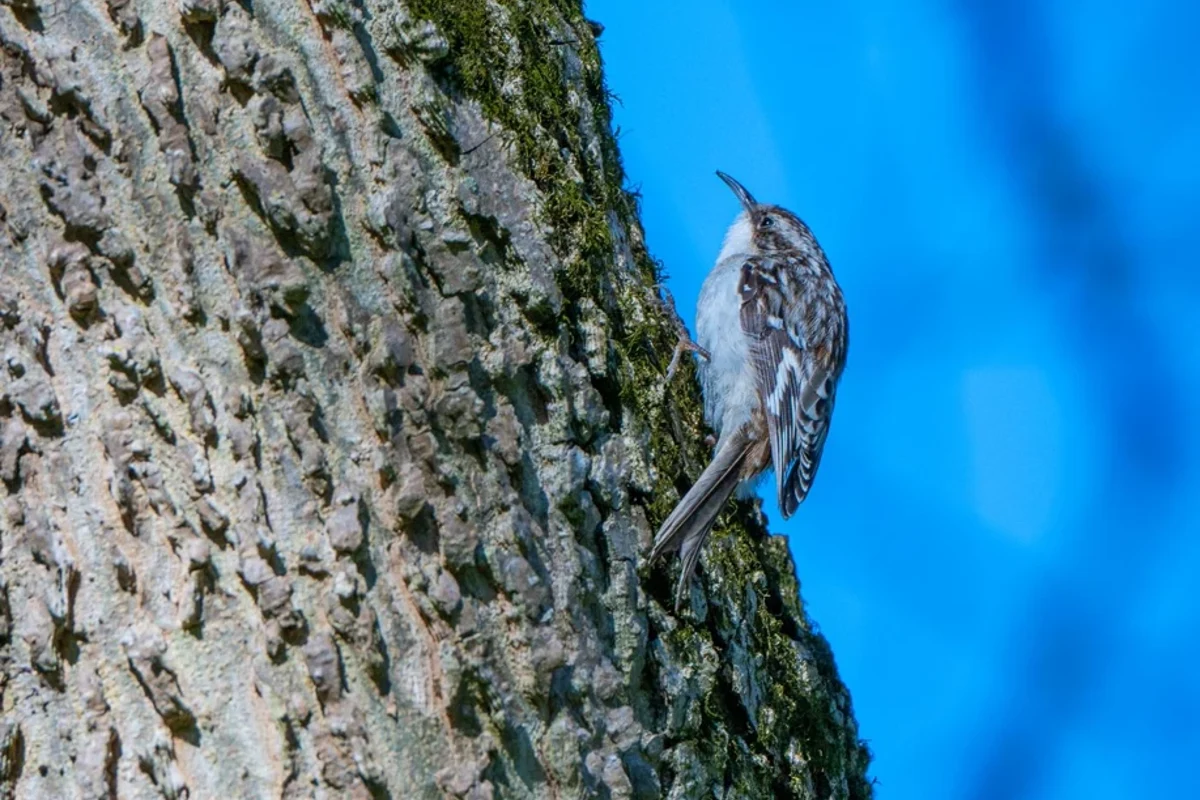
A treecreeper's mottled brown back can make it almost disappear against a trunk. The pale underside becomes visible mainly from the side, and the fine, curved bill may be difficult to see until the bird pauses. Start by looking for movement along the bark rather than for a complete bird outline.
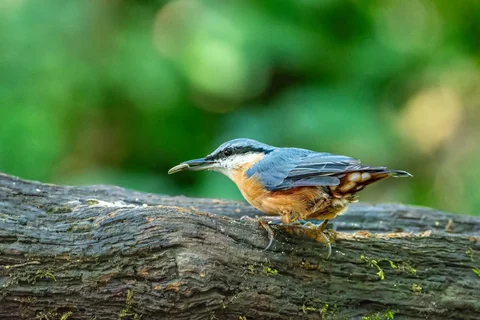
Its usual searching route is upwards, often followed by a flight to a lower point on another tree. A nuthatch can also climb, but has a more solid shape, straighter bill and different colours. Direction of travel helps; the whole bird settles the identification.
Follow one tree at a time
When a treecreeper disappears around the far side, resist rushing after it. Keep the visible edges of the trunk in view. It may come around again, or leave for a neighbouring tree. A wider view makes that departure easier to follow than a tightly magnified patch of empty bark.
Try noting the starting height and the point where you lose sight of it. You do not need exact measurements. Low on trunk and above first branch are enough to preserve the sequence. If it flies away, record which tree it chooses next rather than claiming it completed a full search.
Details worth waiting for
In a good view, notice the way the tail supports the bird against the trunk and how the bill works into crevices. Do not assume every probing movement is successful. Tiny prey may be invisible even through binoculars.
For a photograph, include some of the bark around the bird. A wider frame shows why it was difficult to find and can make the image more informative than an indistinct close crop. Keep the original file if you later seek help with identification.
Treecreepers can use sheltered gaps behind bark for nesting. Never pull loose bark away to find out whether a bird is inside. Observe repeated journeys from a distance and leave the structure alone. The most rewarding part of watching this species is learning to see something that was already present, without changing the tree to reveal it.
Keeping a bird in view through binoculars
A useful practice is to identify a landmark on the trunk before raising the binoculars. A knot, fork or patch of lichen helps you return to the correct place. Keep both the bird and that landmark in mind as it climbs. If it disappears behind the tree, lower the binoculars and watch the wider scene for its next movement.
Increasing magnification is not always the answer. A narrow field can make a small bird harder to recover after each short movement. With a wider view, you may see less feather detail but follow an entire climbing sequence. For learning this species' behaviour, that sequence often supplies more information than a few isolated close glimpses.