Dealing with the ground below a feeder
The feeding station includes the ground beneath it. Check that patch whenever you inspect the hanging container.
Look below the obvious activity
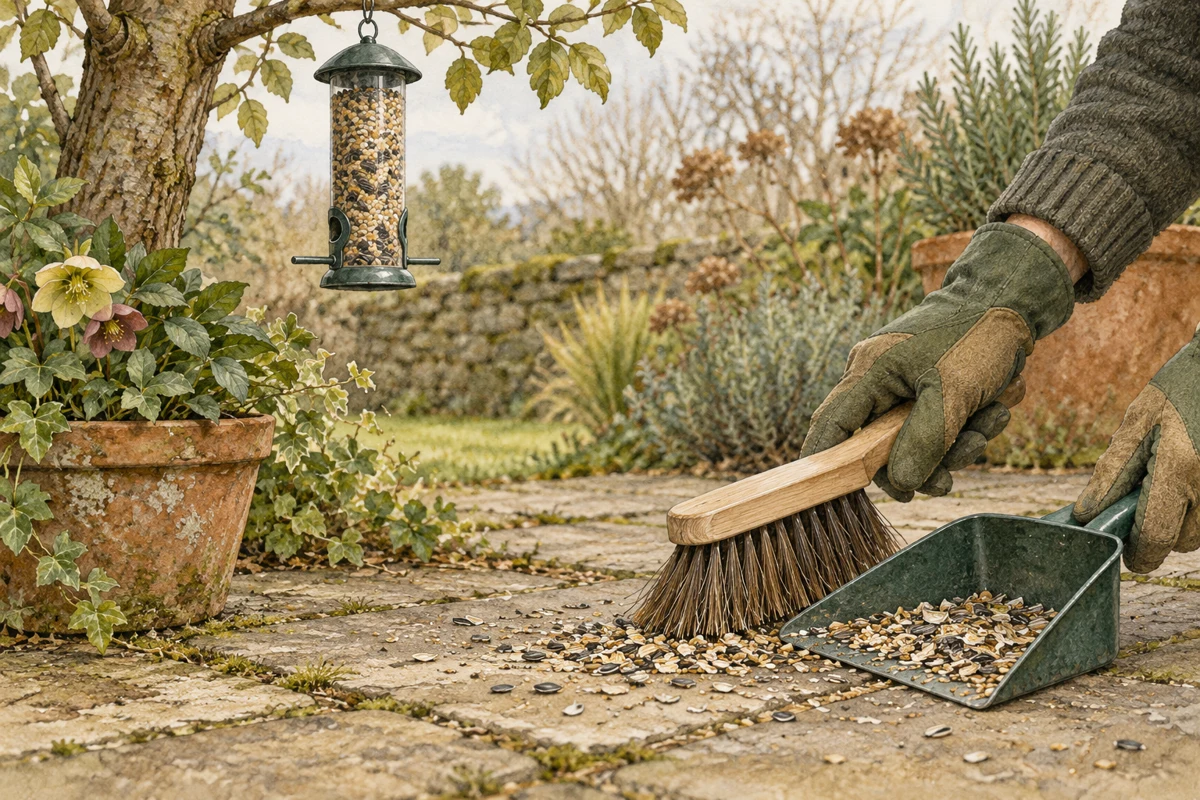
Most attention goes to the birds on a feeder, while small fragments quietly accumulate underneath. A few visible pieces can be the surface of a larger patch hidden in grass, gravel or paving joints. Include the ground in the routine rather than treating it as a separate gardening problem.
Start by noticing when spillage occurs. Does seed pour out while the feeder is filled, blow out in wind or get flicked through ports? Different causes suggest different changes. A tray held below during filling can catch an accidental spill and then be removed; a permanent feeding tray is not the same solution.
Reduce what reaches the ground
Match the feeder to the food and avoid overfilling. Fine seed in a wide-port feeder may escape even when the equipment is undamaged. Check for a loose base or worn fitting before blaming the birds for every scattered piece.
Current guidance discourages flat collecting surfaces used as feeders. Rather than adding a broad tray beneath the tube, reconsider the serving size and equipment. Some waste is possible even with a suitable design, so collection still has to be manageable.
Clean the old patch when rotating
Moving a feeder periodically can reduce repeated contamination of one spot, but it does not erase the old deposit. Remove accessible waste and droppings appropriately. Do not sweep the material into a nearby border where wildlife will continue to encounter it.
Choose positions with realistic access for this work. Dense planting directly under the feeder may make every clean difficult. Conversely, hard ground is only helpful if its joints and edges are actually attended to rather than assumed to be self-cleaning in rain.
Notice the wider visitors
Persistent food on the ground can attract rodents and other animals. If this becomes a problem, pause feeding and remove the source rather than adding poisons or traps around an active wildlife feeding area. Review the amount supplied before restarting.
During the seasonal seed pause, clear remaining deposits as well as taking down the feeder. Otherwise the calendar change exists on the hook but not on the ground.
A small note about repeated waste can be useful when buying the next feeder. Choose the design that addresses the observed problem, rather than purchasing a larger model simply because it needs filling less often.