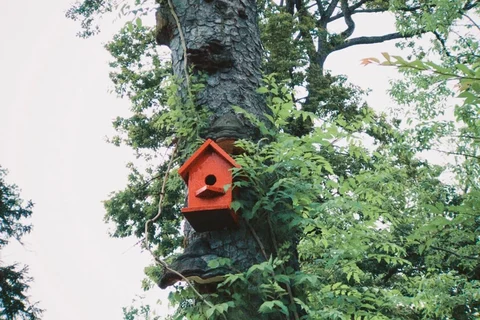
Nest boxes
Finding a sheltered position for a nest box
A compass direction is only part of the decision. Follow the shade, rain and everyday traffic around the proposed site.
Read the noteNotice the pause between movements, the round outline and the way a robin claims a small patch of garden.
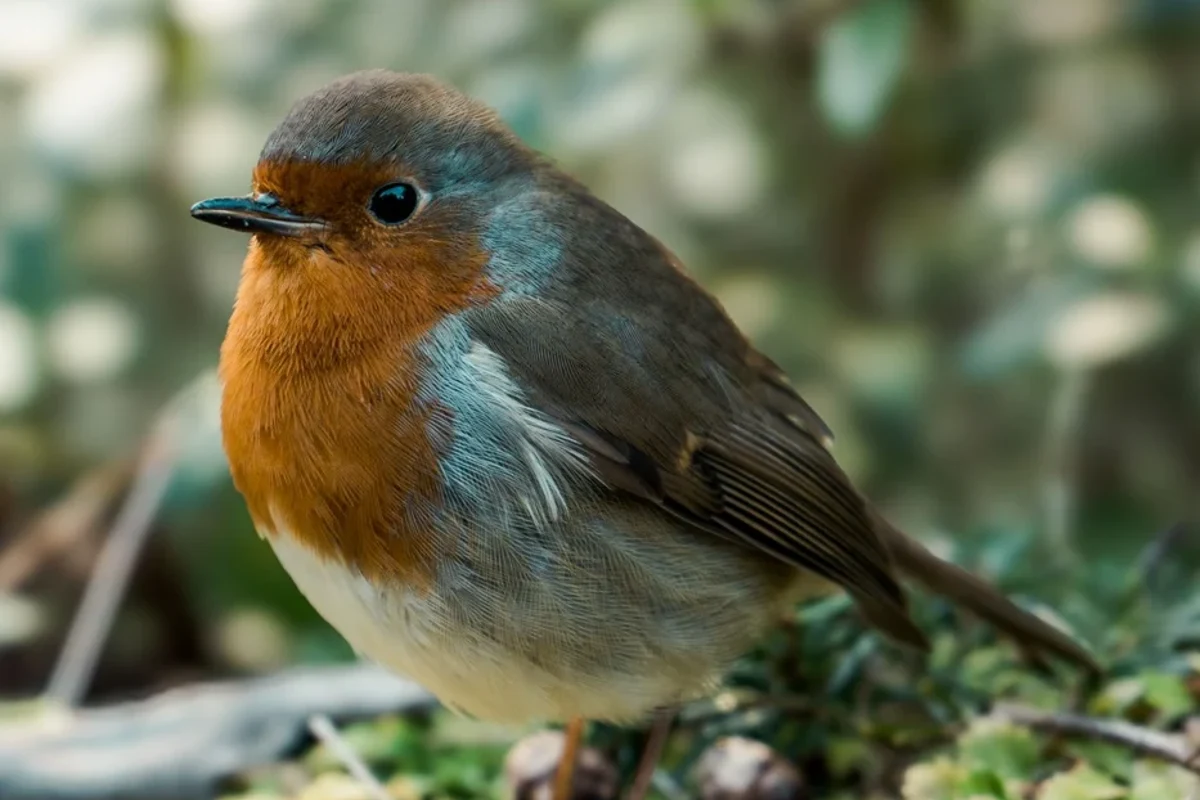
A familiar visitor rewards a second look. Watch its shape, its movements and the small patch of garden it makes its own.
Read the note →A compass direction is only part of the decision. Follow the shade, rain and everyday traffic around the proposed site.
Read the note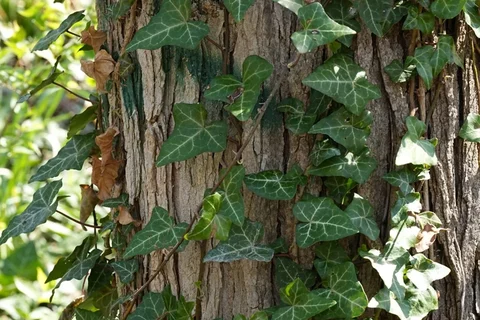
Mature ivy has a different role from a few young trailing shoots.
Read the note
A border can remain useful after the flowers have finished.
Read the note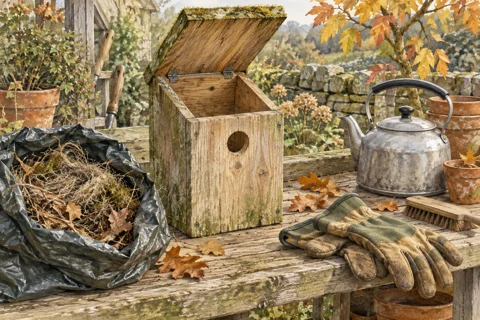
Autumn maintenance starts with confirming that nesting has finished, and with checking the rules if eggs remain.
Read the note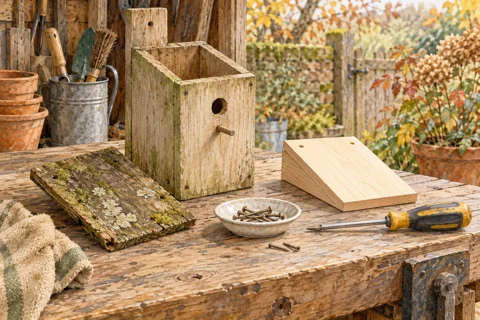
A loose hinge may be repairable; a weakened floor or spreading split may call for a replacement.
Read the note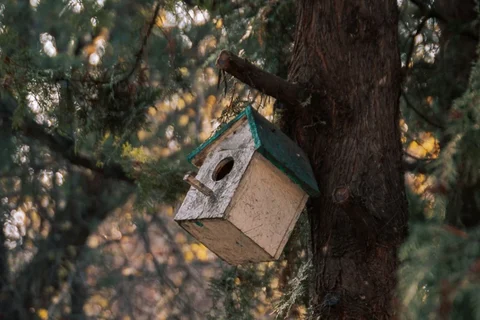
After a gale, look from the ground first. An occupied box needs a different response from an empty one.
Read the note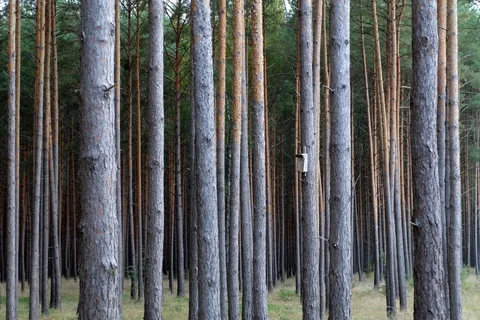
Spacing depends on the birds and the shape of the garden. A row of identical boxes is not always the best use of a fence.
Read the note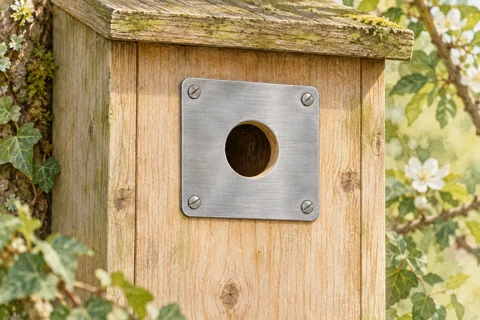
A metal ring can protect an entrance rim, but it cannot make the entire box secure against every predator.
Read the note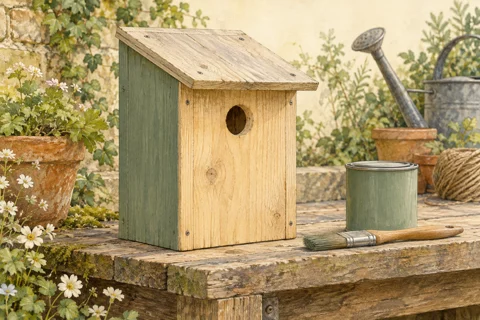
A finish is optional decoration or weather protection, not a reason to coat every surface of the chamber.
Read the noteThere is plenty to notice without getting closer.
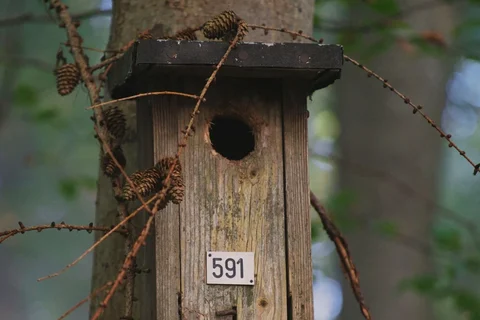
Start with the birds and the place, then look at the box. A decorative roof is a long way down the list.
Read the note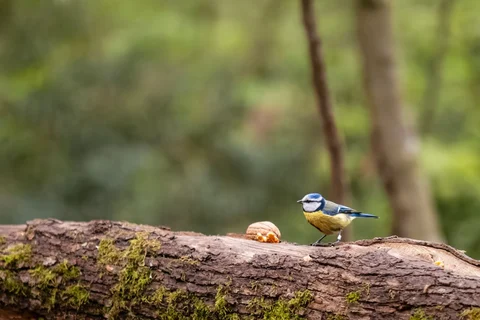
The most revealing view may be a bird searching the underside of a leaf rather than facing the camera.
Read the noteMature ivy has a different role from a few young trailing shoots.
Read the note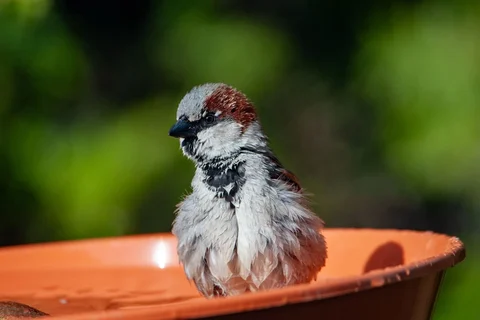
Fresh water and a clean vessel are separate tasks. Replacing the contents does not remove the film on the surface.
Read the note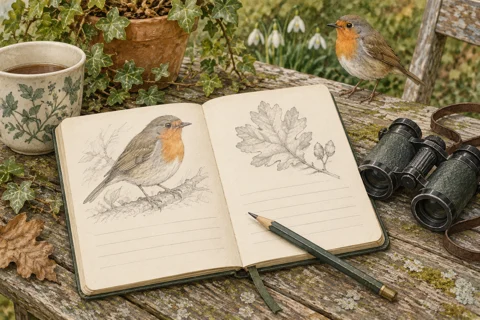
A few precise details written immediately can be more useful than a long species list reconstructed at night.
Read the note